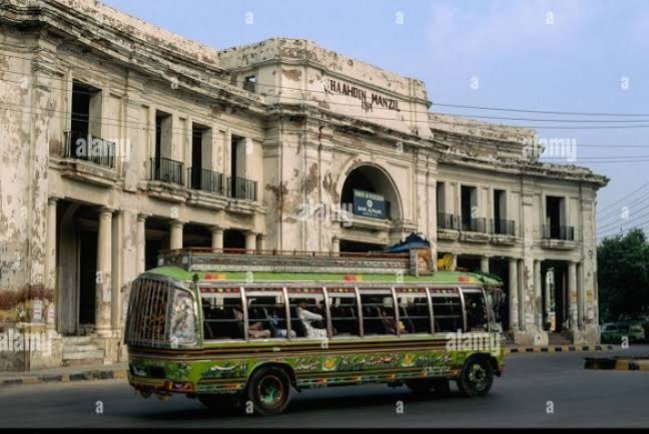
Despite encroachments over more than 12,400 acres of Pakistan Railways land, Lahore Division has generated a record Rs 3 billion through land recovery, effective management and commercial utilisation
Encroachments on Pakistan Railways land have remained a serious threat to public assets for decades. The problem not only weakens the institution’s financial position but also obstructs infrastructure development, railway modernisation and the establishment of a safer and more efficient transport system.
Against this backdrop, the National Assembly Standing Committee on Railways has taken a welcome step by seeking a comprehensive report on encroachments across the railway network.
Although the committee also reviewed recent railway accidents, the restructuring plan and progress on the Main Line One project, the occupation of railway land requires sustained attention rather than occasional parliamentary discussions and short-lived anti-encroachment drives.
According to media reports, more than 12,400 acres of Pakistan Railways land have been illegally occupied across the country, with Punjab and Sindh accounting for the largest share.
The scale of the problem reflects more than administrative weakness. It is the outcome of decades of poor enforcement, inadequate monitoring, institutional neglect and, in some cases, the alleged patronage of politically connected or influential groups.
Railway land is among the institution’s most valuable assets. A significant portion of it is located in major urban centres, commercial districts, industrial areas and along important transportation corridors.
With transparent planning and effective commercial management, these properties could provide Pakistan Railways with a substantial and sustainable source of non-fare revenue.
The consequences of encroachment extend far beyond the loss of public land. Illegal structures create difficulties in maintaining railway tracks, increase safety risks, obstruct the expansion of rail services and complicate the implementation of major infrastructure projects.
The issue becomes even more critical in the context of projects such as Main Line One and the proposed freight corridor between Pipri and Karachi. These projects require secure rights of way, clearly demarcated boundaries and effective legal protection of railway property.
Any delay in recovering occupied land is likely to increase project costs, create legal complications and make implementation more difficult. Land management must therefore be treated as a central component of railway reform rather than a secondary administrative matter.
The performance of Pakistan Railways’ Lahore Division demonstrates that encroached land can be recovered and transformed into a productive source of revenue when administrative commitment, continuous enforcement and effective land management are combined.
During the financial year 2025 26, Lahore Division generated a record Rs 3 billion through the recovery of government land, action against illegal occupants and improved commercial management of railway property.
This was Rs 1.7 billion higher than the approximately Rs1.3 billion earned during the previous financial year, making it one of the most significant financial achievements in the division’s history.
According to Divisional Superintendent Lahore Inamullah, railway land worth nearly Rs 7 billion was recovered from illegal occupation in Badami Bagh and other parts of Lahore Division.
The recovered properties included 51.1 acres of commercial land, 24 marlas of residential property and nine acres of agricultural land.
The division also moved beyond simply recovering the land. Of the reclaimed property, 34 kanals were leased again, generating additional revenue for Pakistan Railways.
This approach should be adopted across the country through a transparent, legally sound and commercially viable land management policy.
The Lahore Division’s experience reinforces the argument that the financial recovery of Pakistan Railways cannot depend solely on higher passenger fares, government subsidies or an increase in the number of trains.
The institution must generate consistent revenue from its land, commercial properties, railway stations, warehouses, parking facilities and other assets.
Pakistan Railways has also completed the geo-referencing of its land boundaries and integrated the information into a centralised digital database with real-time monitoring capabilities.
This is an important development that could improve transparency, identify new encroachments at an early stage and reduce disputes concerning ownership and boundaries.
Technology, however, cannot resolve the problem on its own. Digital maps and centralised records will only be effective when supported by timely legal action, coordination among the railway administration, district authorities and railway police, and the swift pursuit of cases before the courts.
There must also be the political will to take action against illegal occupants without discrimination.
At the same time, anti-encroachment operations must remain lawful, transparent and humane. Economically vulnerable families that have lived on railway land for long periods may require proper surveys and, where justified, rehabilitation measures.
However, there can be no justification for allowing organised land mafias, commercial occupants or influential groups to retain control over valuable public property
Lahore Division has also initiated environmentally friendly measures to protect and improve recovered railway land. In collaboration with the Parks and Horticulture Authority, green belts are being developed along both sides of the railway track from Shahdara to Raiwind.
Practical work on the initiative has already begun around Kot Lakhpat Railway Station. Such projects can help prevent fresh encroachments while improving the urban environment surrounding railway infrastructure
The directions issued by the National Assembly Standing Committee should not be reduced to a routine data collection exercise or another official report.
The findings should form the basis of a comprehensive action plan containing province-wise and division-wise targets, legal timelines, recovery priorities and clearly defined proposals for the future use of reclaimed land.
Lahore Division’s performance can serve as a pilot model for evaluating railway divisions across the country. Divisions and officials that successfully recover land and generate transparent revenue should be recognised, while responsibility must be fixed where poor performance, record manipulation or fresh encroachments are identified.
Protecting railway land is ultimately about safeguarding public property, restoring institutional credibility and creating the physical and financial space required for a modern, safe and commercially sustainable railway system.
Lahore Division has shown that government land can not only be recovered from illegal occupation but also transformed into a source of billions of rupees in revenue.
The challenge now is to turn this divisional success into a nationwide policy. Unless the state demonstrates a sustained commitment to recovering, protecting and transparently utilising these strategic assets, the broader agenda of financial and administrative reform within Pakistan Railways will remain incomplete.

Published: July 10, 2026 - 5:33 PM
Recovery of Railway Land: Lahore Division Offers a Model for Nationwide Reform
ریلوے اراضی کی بازیابی، لاہور ڈویژن کی کامیابی ملک گیر اصلاحات کیلئے قابلِ تقلید مثال
Muhammad Faisal Sulehria
Despite encroachments over more than 12,400 acres of Pakistan Railways land, Lahore Division has generated a record Rs 3 billion through land recovery, effective management and commercial utilisation