ReNews Pakistan
← Back to home

Real Estate Insights

27 news articles

Indus Waters Treaty : A Legal Boost for Pakistan’s Position and Growing Questions for India

Indus Waters Treaty : A Legal Boost for Pakistan’s Position and Growing Questions for India

▫️Muhammad Faisal Sulehria

The Hague arbitration findings reinforce the treaty’s legal status and underline the importance of international agreements in managing water disputes between Pakistan and IndiaThe Indus Waters Treaty is far more than an agreement dividi...

The Hague arbitration findings reinforce the treaty’s legal status and underline the importance of international agreements in managing water disputes between Pakistan and India
The Indus Waters Treaty is far more than an agreement dividing river waters between Pakistan and India. It is one of the most important international legal frameworks governing relations between two long-standing rivals. Despite wars, political crises and decades of tensions, the treaty survived for generations. That history makes the latest legal findings by the Permanent Court of Arbitration in The Hague particularly significant for Pakistan and for the wider principle of international treaty law.
At the heart of the dispute is a fundamental question: can a country unilaterally suspend or disregard an international agreement because of political or security-related grievances? The arbitration findings provide important clarification on this issue by maintaining that the Indus Waters Treaty remains legally operative and that the obligations created under it continue to apply. This includes obligations concerning the design and operation of Indian hydropower projects on the western rivers.
Pakistan has consistently argued that disputes over the Indus, Jhelum and Chenab rivers should be addressed through the mechanisms established by the treaty rather than through political pressure or unilateral action. That principle is central to the treaty itself. It created a rules-based system under which disagreements could be addressed through bilateral mechanisms, a neutral expert or arbitration, depending on the nature of the dispute.
For Pakistan, the issue has enormous economic and social importance. The country’s agriculture, food security, hydropower generation and the livelihoods of millions of people are closely linked to the Indus River system. Any serious disruption to the availability or management of these waters could therefore have consequences far beyond diplomacy. It could affect agricultural production, energy supplies and economic stability.
The legal findings are also important because they challenge several arguments that could otherwise be used to justify suspending the treaty. The court’s conclusions indicate that Pakistan’s alleged failure to agree to amendments did not amount to a material breach that would terminate its obligations. The findings also indicate that allegations related to terrorism cannot, by themselves, provide a legal basis for suspending a treaty that specifically establishes rights and obligations concerning the waters of the Indus system.
The dispute surrounding the Ratle hydropower project adds another important dimension. Pakistan has raised concerns for years about the design and operation of Indian projects on the western rivers. Interim measures in the arbitration process are significant because they seek to prevent irreversible developments from affecting the dispute before the relevant legal process reaches its conclusion. In water disputes, the consequences of construction decisions can extend far into the future, making such safeguards particularly important.
At the same time, the legal findings should not be viewed as the final solution to the broader Pakistan India water dispute. Courts and arbitration bodies can clarify legal obligations, but they cannot replace diplomacy or day to day institutional cooperation. A treaty can provide the rules, but those rules ultimately require communication and mechanisms through which both sides can address technical and operational concerns.
India’s rejection of the Permanent Court of Arbitration’s jurisdiction adds another layer of complexity. However, disagreement with an international legal process does not automatically eliminate the principles governing international agreements. If states were free to accept treaty obligations when convenient and disregard them whenever political circumstances changed, the reliability of international agreements would be seriously weakened.
The history of the Indus Waters Treaty demonstrates why rules-based agreements matter. Pakistan and India have remained deeply divided on numerous political and security issues, yet the water framework continued to provide a mechanism for managing one of their most sensitive shared resources. That resilience is itself an important lesson for international diplomacy.
For Pakistan, the next step should therefore involve a combination of legal preparedness, close monitoring of developments on the western rivers and efforts to restore meaningful institutional engagement under the treaty. A strong legal position is important, but long-term water security also requires technical cooperation and sustained diplomacy.
The broader lesson extends beyond South Asia. Water is increasingly becoming a strategic resource in a world facing population growth, climate change and growing pressure on freshwater supplies. The Indus Waters Treaty shows that even countries with deeply hostile relations can create rules for managing shared natural resources. Its future should therefore be shaped by law, responsibility and dialogue rather than by unilateral political pressure.
Ultimately, the significance of the arbitration findings lies not only in their immediate implications for Pakistan and India but also in the wider principle they reinforce: international agreements derive their value from the stability of their obligations. If the Indus Waters Treaty is to continue serving its purpose, both countries must preserve the rules based framework that has helped manage their shared rivers for decades.
Punjab's Plan to Develop 120 Model Villages: A New Approach to Rural Infrastructure

Punjab's Plan to Develop 120 Model Villages: A New Approach to Rural Infrastructure

▫️ Muhammad Faisal Sulehria

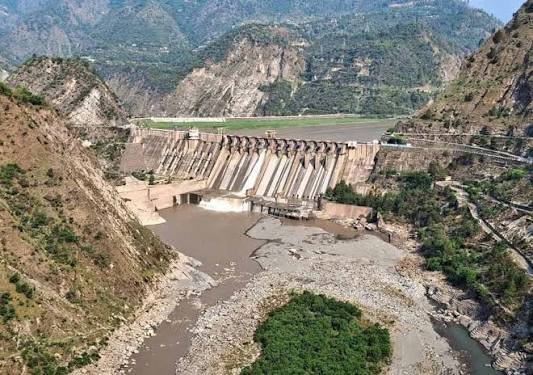
The Punjab government's decision to approve a pilot programme for developing 120 model villages represents a significant policy initiative aimed at improving rural infrastructure, sanitation and basic public facilities.

World Habitat Day: Three Billion People Worldwide Deprived of Adequate Housing. Why?

World Habitat Day: Three Billion People Worldwide Deprived of Adequate Housing. Why?

▫️ Muhammad Faisal Sulehria

World Habitat Day 2026 has been observed against the backdrop of a deepening global housing crisis in which safe, adequate and affordable shelter remains beyond the reach of billions of people.

10 Years Since Panama Papers, Offshore Secrecy Infrastructure Still Remains

10 Years Since Panama Papers, Offshore Secrecy Infrastructure Still Remains

▫️ Muhammad Faisal Sulehria

Ten years have passed since the Panama Papers exposed the scale and complexity of the global offshore financial system, yet the basic infrastructure that enables financial secrecy and anonymous ownership has not been completely dismantled.

New Provinces or Stronger Local Government? Pakistan Must Fix Governance Before Redrawing Its Map

New Provinces or Stronger Local Government? Pakistan Must Fix Governance Before Redrawing Its Map

▫️Muhammad Faisal Sulehria

Smaller provinces may improve administrative access, but without meaningful political, financial and administrative devolution, Pakistan risks creating more centres of power rather than bringing government closer to citizensPakistan’s go...

World Bank Downgrades Pakistan’s Barrage Project Over Weak Institutional Performance

World Bank Downgrades Pakistan’s Barrage Project Over Weak Institutional Performance

▫️ Muhammad Faisal Sulehria

The $314.93 million Sindh Barrages Improvement Project has made substantial progress on physical rehabilitation and modernisation works at Guddu and Sukkur barrages. Yet the World Bank has downgraded the project’s development objective a...

Why Do We Still Prefer Thermal Power When Hydropower Is Cheaper and Available?

Why Do We Still Prefer Thermal Power When Hydropower Is Cheaper and Available?

▫️Muhammad Faisal Sulehria

Pakistan’s power sector is facing a striking contradiction. On one side, hydropower generation has crossed 7,000 MW during the monsoon as higher river flows have improved water availability. On the other, Punjab is reportedly facing a po...

Solar Power Reaches 27% of Total Generation, Transforming the Traditional Infrastructure Model

Solar Power Reaches 27% of Total Generation, Transforming the Traditional Infrastructure Model

▫️Muhammad Faisal Sulehria

Pakistan’s rapidly expanding rooftop and distributed solar market is beginning to reshape not only the country’s energy system but also the economics of residential, commercial and industrial property. According to new analysis by the Pa...

Punjab’s Idle Public Assets: Can Government Property Become a New Source of Revenue and Development?

Punjab’s Idle Public Assets: Can Government Property Become a New Source of Revenue and Development?

▫️Muhammad Faisal Sulehria

Punjab’s decision to establish a dedicated authority for identifying, managing and generating value from underused public assets could represent an important development for both the province’s real estate sector and its public finances....

Indus Waters Treaty : A Legal Boost for Pakistan’s Position and Growing Questions for India

Indus Waters Treaty : A Legal Boost for Pakistan’s Position and Growing Questions for India

▫️Muhammad Faisal Sulehria

The Hague arbitration findings reinforce the treaty’s legal status and underline the importance of international agreements in managing water disputes between Pakistan and IndiaThe Indus Waters Treaty is far more than an agreement dividi...


The Hague arbitration findings reinforce the treaty’s legal status and underline the importance of international agreements in managing water disputes between Pakistan and India
The Indus Waters Treaty is far more than an agreement dividing river waters between Pakistan and India. It is one of the most important international legal frameworks governing relations between two long-standing rivals. Despite wars, political crises and decades of tensions, the treaty survived for generations. That history makes the latest legal findings by the Permanent Court of Arbitration in The Hague particularly significant for Pakistan and for the wider principle of international treaty law.
At the heart of the dispute is a fundamental question: can a country unilaterally suspend or disregard an international agreement because of political or security-related grievances? The arbitration findings provide important clarification on this issue by maintaining that the Indus Waters Treaty remains legally operative and that the obligations created under it continue to apply. This includes obligations concerning the design and operation of Indian hydropower projects on the western rivers.
Pakistan has consistently argued that disputes over the Indus, Jhelum and Chenab rivers should be addressed through the mechanisms established by the treaty rather than through political pressure or unilateral action. That principle is central to the treaty itself. It created a rules-based system under which disagreements could be addressed through bilateral mechanisms, a neutral expert or arbitration, depending on the nature of the dispute.
For Pakistan, the issue has enormous economic and social importance. The country’s agriculture, food security, hydropower generation and the livelihoods of millions of people are closely linked to the Indus River system. Any serious disruption to the availability or management of these waters could therefore have consequences far beyond diplomacy. It could affect agricultural production, energy supplies and economic stability.
The legal findings are also important because they challenge several arguments that could otherwise be used to justify suspending the treaty. The court’s conclusions indicate that Pakistan’s alleged failure to agree to amendments did not amount to a material breach that would terminate its obligations. The findings also indicate that allegations related to terrorism cannot, by themselves, provide a legal basis for suspending a treaty that specifically establishes rights and obligations concerning the waters of the Indus system.
The dispute surrounding the Ratle hydropower project adds another important dimension. Pakistan has raised concerns for years about the design and operation of Indian projects on the western rivers. Interim measures in the arbitration process are significant because they seek to prevent irreversible developments from affecting the dispute before the relevant legal process reaches its conclusion. In water disputes, the consequences of construction decisions can extend far into the future, making such safeguards particularly important.
At the same time, the legal findings should not be viewed as the final solution to the broader Pakistan India water dispute. Courts and arbitration bodies can clarify legal obligations, but they cannot replace diplomacy or day to day institutional cooperation. A treaty can provide the rules, but those rules ultimately require communication and mechanisms through which both sides can address technical and operational concerns.
India’s rejection of the Permanent Court of Arbitration’s jurisdiction adds another layer of complexity. However, disagreement with an international legal process does not automatically eliminate the principles governing international agreements. If states were free to accept treaty obligations when convenient and disregard them whenever political circumstances changed, the reliability of international agreements would be seriously weakened.
The history of the Indus Waters Treaty demonstrates why rules-based agreements matter. Pakistan and India have remained deeply divided on numerous political and security issues, yet the water framework continued to provide a mechanism for managing one of their most sensitive shared resources. That resilience is itself an important lesson for international diplomacy.
For Pakistan, the next step should therefore involve a combination of legal preparedness, close monitoring of developments on the western rivers and efforts to restore meaningful institutional engagement under the treaty. A strong legal position is important, but long-term water security also requires technical cooperation and sustained diplomacy.
The broader lesson extends beyond South Asia. Water is increasingly becoming a strategic resource in a world facing population growth, climate change and growing pressure on freshwater supplies. The Indus Waters Treaty shows that even countries with deeply hostile relations can create rules for managing shared natural resources. Its future should therefore be shaped by law, responsibility and dialogue rather than by unilateral political pressure.
Ultimately, the significance of the arbitration findings lies not only in their immediate implications for Pakistan and India but also in the wider principle they reinforce: international agreements derive their value from the stability of their obligations. If the Indus Waters Treaty is to continue serving its purpose, both countries must preserve the rules based framework that has helped manage their shared rivers for decades.
Punjab's Plan to Develop 120 Model Villages: A New Approach to Rural Infrastructure

Punjab's Plan to Develop 120 Model Villages: A New Approach to Rural Infrastructure

▫️ Muhammad Faisal Sulehria

The Punjab government's decision to approve a pilot programme for developing 120 model villages represents a significant policy initiative aimed at improving rural infrastructure, sanitation and basic public facilities.

World Habitat Day: Three Billion People Worldwide Deprived of Adequate Housing. Why?

World Habitat Day: Three Billion People Worldwide Deprived of Adequate Housing. Why?

▫️ Muhammad Faisal Sulehria

World Habitat Day 2026 has been observed against the backdrop of a deepening global housing crisis in which safe, adequate and affordable shelter remains beyond the reach of billions of people.

10 Years Since Panama Papers, Offshore Secrecy Infrastructure Still Remains

10 Years Since Panama Papers, Offshore Secrecy Infrastructure Still Remains

▫️ Muhammad Faisal Sulehria

Ten years have passed since the Panama Papers exposed the scale and complexity of the global offshore financial system, yet the basic infrastructure that enables financial secrecy and anonymous ownership has not been completely dismantled.

New Provinces or Stronger Local Government? Pakistan Must Fix Governance Before Redrawing Its Map

New Provinces or Stronger Local Government? Pakistan Must Fix Governance Before Redrawing Its Map

▫️Muhammad Faisal Sulehria

Smaller provinces may improve administrative access, but without meaningful political, financial and administrative devolution, Pakistan risks creating more centres of power rather than bringing government closer to citizensPakistan’s go...

World Bank Downgrades Pakistan’s Barrage Project Over Weak Institutional Performance

World Bank Downgrades Pakistan’s Barrage Project Over Weak Institutional Performance

▫️ Muhammad Faisal Sulehria

The $314.93 million Sindh Barrages Improvement Project has made substantial progress on physical rehabilitation and modernisation works at Guddu and Sukkur barrages. Yet the World Bank has downgraded the project’s development objective a...

Why Do We Still Prefer Thermal Power When Hydropower Is Cheaper and Available?

Why Do We Still Prefer Thermal Power When Hydropower Is Cheaper and Available?

▫️Muhammad Faisal Sulehria

Pakistan’s power sector is facing a striking contradiction. On one side, hydropower generation has crossed 7,000 MW during the monsoon as higher river flows have improved water availability. On the other, Punjab is reportedly facing a po...

Solar Power Reaches 27% of Total Generation, Transforming the Traditional Infrastructure Model

Solar Power Reaches 27% of Total Generation, Transforming the Traditional Infrastructure Model

▫️Muhammad Faisal Sulehria

Pakistan’s rapidly expanding rooftop and distributed solar market is beginning to reshape not only the country’s energy system but also the economics of residential, commercial and industrial property. According to new analysis by the Pa...

Punjab’s Idle Public Assets: Can Government Property Become a New Source of Revenue and Development?

Punjab’s Idle Public Assets: Can Government Property Become a New Source of Revenue and Development?

▫️Muhammad Faisal Sulehria

Punjab’s decision to establish a dedicated authority for identifying, managing and generating value from underused public assets could represent an important development for both the province’s real estate sector and its public finances....

More Real Estate News

National Real Estate News

See All →

City and District Real Estate News

See All →

Global Real Estate News

See All →

Corporate Real Estate News

See All →

Social Real Estate News

See All →

Arazi Nama

See All →