Karachi : ReNews Pakistan
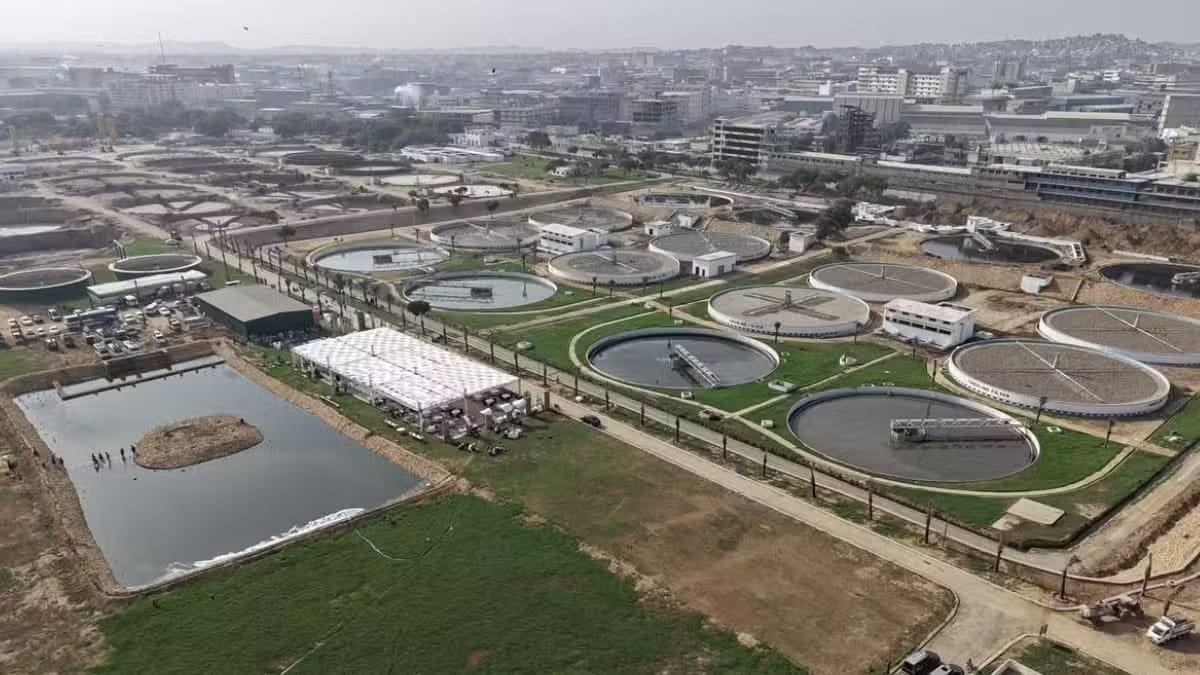
The Sindh government has inaugurated the Karachi Industrial Water Park (TP-1), a major wastewater recycling project designed to supply treated municipal wastewater to industries while conserving freshwater for drinking and household consumption across the city.
The project will have the capacity to provide up to 100 million gallons per day (MGD) of recycled water to Karachi’s industrial sector once its two phases become fully operational, potentially reducing the pressure that factories place on the city’s limited freshwater resources.
Under the first phase, the facility will supply 35 MGD of treated wastewater for industrial use. Work on the second phase, which will add another 65 MGD to the system, is being launched alongside the inauguration of the initial phase.
The second phase is targeted for completion within six months. Once the expansion is completed, the facility is expected to provide industries with up to 100 MGD of treated process water during 2027.
The initiative is based on recycling municipal wastewater that would otherwise remain underutilised or contribute to environmental problems. After treatment, the recycled water will be supplied to factories for industrial processes, replacing a portion of the freshwater currently consumed by the industrial sector.
The recycled supply is intended specifically for industrial purposes and will not be used as drinking water.
Karachi has long faced pressure on its water supply system due to rapid population growth, urban expansion, industrial demand and constraints in existing water infrastructure. Diverting treated wastewater to industries is expected to allow a greater share of freshwater supplies to remain available for residential and other essential uses.
The project also introduces a more circular approach to urban water management by treating wastewater as a reusable resource rather than waste requiring disposal. Besides conserving freshwater, recycling municipal wastewater can help reduce the environmental burden associated with untreated or inadequately treated sewage entering natural waterways and coastal areas.
The Sindh government is advancing the industrial water park in collaboration with public and private sector stakeholders as part of wider efforts to strengthen Karachi’s water infrastructure and improve the sustainability of industrial development.
For Karachi’s industrial areas, a dedicated recycled-water supply could also provide an alternative source of process water at a time when competition for conventional water supplies remains high between residential, commercial and industrial consumers.
Once both phases are operational, the 100 MGD recycling capacity could represent a significant shift in how the city meets industrial water demand, with wastewater increasingly reused for economic activity while higher-quality freshwater is preserved for residents.
The Karachi Industrial Water Park forms part of broader efforts to improve the city’s long-term water security, promote sustainable urban development and reduce the environmental impact of wastewater disposal.
Published: October 5, 2026 - 12:02 PM
Karachi Launches Industrial Water Park to Recycle 100 MGD Wastewater for Factories
کراچی میں صنعتی واٹر پارک کا افتتاح، فیکٹریوں کیلئے روزانہ 10 کروڑ گیلن گندے پانی کی ری سائیکلنگ کا منصوبہ
▫️ First phase to supply 35 MGD of treated wastewater to industries, reducing pressure on Karachi’s freshwater resources
Karachi : ReNews PakistanThe Sindh government has inaugurated the Karachi Industrial Water Park (TP-1), a major wastewater recycling project designed to supply treated municipal wastewater to industries while conserving freshwater for dr...