Pakistan’s solar transformation is entering a new phase, and its impact is increasingly moving beyond the electricity sector into housing, commercial property and urban development.
For the real estate industry, the important question is no longer simply whether a house, office or commercial building has solar panels. The next question is whether a property can generate, store and intelligently manage enough of its own electricity to reduce dependence on an increasingly expensive and changing grid.
The scale of the shift is visible in net metering data.
Electricity purchased by the grid from net metered consumers reached around 270 GWh in June 2026, compared with barely 20 GWh in June 2023. In just three years, the volume has increased more than thirteen fold.
The trend was even more pronounced in April 2026, when net-metered electricity purchases approached 390 GWh, compared with about 310 GWh in April 2025 and around 100 GWh in 2024.
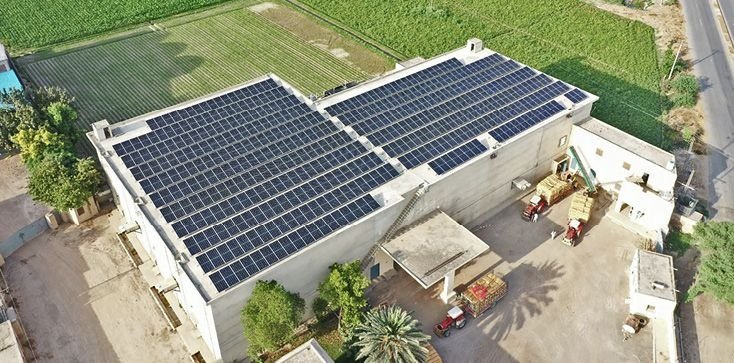
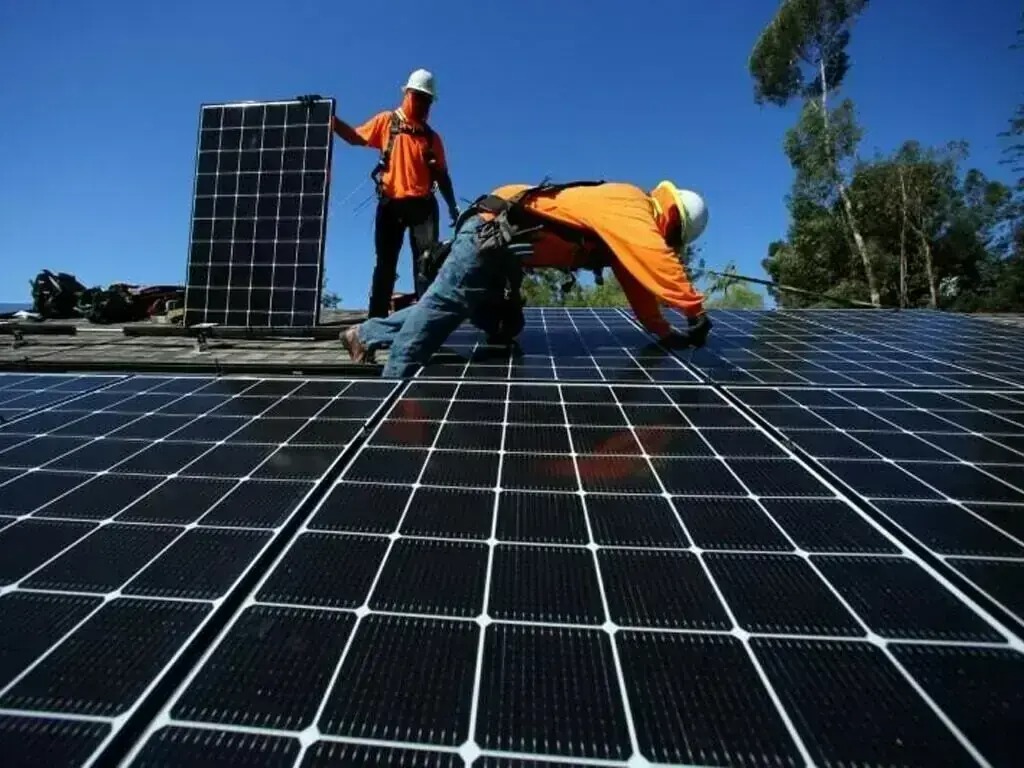
These numbers matter for the property market because rooftop solar has become a significant part of household and commercial investment decisions. Houses, offices, factories, shopping facilities and other buildings are increasingly being assessed not only on location and construction quality but also on their ability to control future energy costs.
Pakistan is believed to have imported more than 55,000MW worth of solar panels cumulatively, while officially net metered installations represent only a fraction of that capacity.
That gap suggests that much of the solar market exists outside conventional net metering. Panels are being used for direct self consumption, commercial and industrial installations, hybrid systems and, increasingly, solar systems connected with battery storage.
This distinction is particularly important for real estate developers.
Under the earlier model, rooftop solar was often treated as an additional feature installed after construction. In the emerging market, energy infrastructure could become part of the original design of residential and commercial projects.
Developers may increasingly have to consider roof orientation, available solar area, electrical load planning, battery spaces, ventilation and safety requirements, backup systems and smart energy management while designing new buildings.
The change in regulation could accelerate this transition.
With net billing replacing the previous net metering arrangement for new connections, exporting surplus electricity to the grid is expected to become less financially attractive than under the earlier system.
That changes the economics of rooftop solar.
Instead of designing systems mainly to export excess daytime electricity, homeowners and businesses will have a stronger incentive to use more of their solar generation themselves.
Battery storage becomes central to that model.
Lithium battery imports reached a record USD88 million in July, signalling that storage is rapidly moving from a niche product towards a more important part of Pakistan’s energy market.
Only two years ago, spending on lithium battery imports was extremely small compared with solar panel imports. The gap has now narrowed sharply.
For property owners, batteries solve one of solar power’s biggest limitations: timing.
A conventional rooftop system generates most of its electricity during daylight hours. A battery equipped property can store part of that electricity and use it in the evening or during periods when grid electricity is expensive or unavailable.
For residential real estate, this could gradually change what buyers consider a well equipped home.
Solar panels alone may no longer represent the premium energy feature they once did. Buyers may increasingly compare properties on the basis of installed solar capacity, battery backup, expected grid dependence, electrical efficiency and the ability to operate essential loads during outages.
The same shift could be even more important in commercial real estate.
Electricity is a major operating expense for offices, retail buildings, warehouses and other commercial properties. Buildings capable of producing and storing part of their own electricity could potentially offer occupiers greater predictability over energy costs.
For landlords and developers, energy performance may therefore become increasingly relevant to tenant demand and long-term building competitiveness.
Housing societies and large residential developments also need to consider the broader consequences.
If thousands of households within a development independently install solar panels and batteries, the electricity demand profile of that community can change substantially. Daytime grid demand can fall while evening consumption may also begin to decline as households discharge stored solar electricity.
That means electrical infrastructure planned around traditional consumption patterns may no longer reflect how future communities actually use power.
Developers planning new housing schemes therefore have an opportunity to think beyond individual rooftop systems.
Future projects could incorporate solar ready roofs, battery ready electrical infrastructure, energy-efficient street lighting, smart meters, community level storage and better management of common-area electricity consumption from the planning stage.
The transition also has implications for property valuation.
Location, plot size, construction quality and neighbourhood infrastructure will remain fundamental factors in real estate value. But in a country where electricity costs have become a major household and business concern, the operating cost of a property could increasingly influence purchasing and rental decisions.
A building that requires significantly less grid electricity may offer an economic advantage over a similar property with high recurring energy expenses.
This does not mean Pakistan’s solar boom is ending because net-metering rules are changing.
The opposite may happen.
Solar adoption could increasingly shift from a model based on selling surplus electricity to the grid towards one centred on self-consumption and storage.
For the power sector, that creates a planning challenge.
For real estate, however, it signals the emergence of a different type of property: one that is not merely connected to utility infrastructure but actively generates, stores and manages energy.
Pakistan’s first solar wave changed rooftops.
The battery wave could begin changing the design, economics and marketability of the buildings beneath them.
For developers, housing societies and property investors, that is no longer just an energy sector trend. It is becoming a real estate planning issue.
Published: August 13, 2026 - 4:40 PM
The Growing Use of Solar Power and Batteries in Homes and Commercial Buildings in Pakistan — and the Questions It Raises
پاکستان میں گھروں، کمرشل عمارتوں میں سولر اور بیٹریوں کا بڑھتا استعمال اور اس سے جڑے سوال
▫️Muhammad Faisal Sulehria
Pakistan’s solar transformation is entering a new phase, and its impact is increasingly moving beyond the electricity sector into housing, commercial property and urban development.