ReNews Pakistan
← Back to home

Real Estate Insights

27 news articles

Possession, Documents and Ownership: The Root Cause of Civil Land Litigation in South Asia

Possession, Documents and Ownership: The Root Cause of Civil Land Litigation in South Asia

Muhammad Faisal Sulehria

A fundamental feature of property disputes in Pakistan and India is that the person recorded as the legal owner in official documents is often different from the person who has physical possession of the land, house or commercial property.

A fundamental feature of property disputes in Pakistan and India is that the person recorded as the legal owner in official documents is often different from the person who has physical possession of the land, house or commercial property.

One party may produce a registered sale deed, mutation entry, land ownership record, inheritance document or court order, while the other relies on prolonged possession, construction, residence, cultivation, electricity bills or testimony from local witnesses as evidence supporting their claim.

This contradiction lies at the heart of a significant number of civil cases involving title to property, recovery of possession, partition, inheritance, injunctions, sale agreements and cancellation of mutation entries.

Where Did the Idea of Fifty Years of Possession Come From?

A widespread public belief suggests that a person who remains in possession of a property for fifty years automatically becomes its legal owner. In reality, no general fifty year rule existed under the laws of British India.

Under the Limitation Act 1908, the general limitation period associated with adverse possession was twelve years. The principle was intended to address situations in which the original owner failed to approach a court for the protection of their rights for an extended period, while another person remained openly in possession of the property in direct denial of the owner’s title.

After the expiry of the prescribed period, the original owner’s legal claim could, in certain circumstances, become barred.

However, not every instance of prolonged possession amounts to adverse possession. A tenant, agricultural tenant, licensee, caretaker, relative or person residing with the permission of the owner does not become the owner merely because time has passed.

To establish adverse possession, it must be proved that the person in possession clearly rejected the title of the original owner, maintained continuous and visible possession, and that the original owner was aware of the hostile nature of that possession.

The Current Law in India

Under India’s Limitation Act 1963, the general period for filing a suit to recover private property is twelve years. This period begins when the defendant’s possession becomes adverse to the original owner.

For certain property claims brought by the government or a local authority, the limitation period is thirty years.

Section 27 of the Indian law further provides that the original owner’s right may be extinguished once the prescribed limitation period expires.

In 2019, the Supreme Court of India ruled that where all legal requirements of adverse possession have been fulfilled, the person in possession may rely on the right acquired through adverse possession not only as a defence but also as the basis of a claim to ownership.

Despite this position, Indian courts apply the doctrine strictly. The person claiming adverse possession must prove the date on which possession began, the nature and continuity of that possession, the boundaries of the property and clear hostility towards the title of the original owner.

Merely stating that a family has lived on the property for several decades, paid electricity bills or constructed buildings on it is not sufficient.

The Supreme Court of India has also strongly criticised the tendency of government institutions to acquire citizens’ land through adverse possession. The Court has observed that a welfare state should not rely on adverse possession to take over property belonging to its citizens.

Why Was Adverse Possession Abolished in Pakistan?

Following independence, Pakistan adopted the Limitation Act 1908. Under Section 28 and Article 144 of the Act, the original owner’s right could be extinguished in certain circumstances, allowing the right of an adverse possessor to become legally established.

In 1991, the Shariat Appellate Bench of the Supreme Court held that depriving an original owner of property merely because of the passage of time, while granting rights to an unlawful possessor, was inconsistent with Islamic principles.

To implement this judgment, Section 28 and Article 144 were deleted in 1995.

Following this change, prolonged unlawful possession in Pakistan, even for fifty years, does not automatically create ownership against the original owner.

However, the law of limitation has not been abolished in its entirety. Limitation periods still apply to claims based on previous possession, eviction, contracts, inheritance and various other rights.

Every dispute must therefore be examined separately according to the nature of the claim, the legal basis of possession and the relevant statutory provision.

The Difference Between a Registered Deed, Mutation and Land Ownership Record

A major misconception in Pakistan is that the entry of a person’s name in a mutation or revenue record conclusively proves ownership.

Courts have repeatedly clarified that mutation entries are primarily recorded for revenue and fiscal purposes. A mutation is not, by itself, a document of title. Nor can it validate an underlying transaction affected by forgery, fraud or lack of legal authority.

A party relying on a mutation must also prove the original transaction on which it is based, such as a sale, gift, inheritance or exchange.

Similarly, a registered document can constitute strong evidence, but registration alone cannot cure every legal defect. If the person selling the property did not possess valid title, the mere registration of the sale deed cannot automatically create lawful ownership.

Why Do Ownership and Possession Become Separated?

There are several practical reasons for the separation between legal ownership and physical possession.

After the death of an owner, heirs often fail to record the inheritance mutation. Joint land may continue to be used for several generations without formal partition. Owners may move abroad or relocate to other cities.

Tenancy and caretaker arrangements are frequently made without written agreements. General powers of attorney are sometimes misused. Registered deeds, revenue records and land maps may not correspond with one another.

In some cases, a court delivers a judgment, but the decision is never incorporated into the relevant revenue record.

Similarly, a buyer may complete the registration of the property but fail to obtain formal physical possession. Some people purchase vacant plots and do not inspect them for years, creating opportunities for fraudsters and organised land grabbers.

On the other hand, some occupants may have used land for several generations but possess incomplete documentation.

In such circumstances, one party presents the legal record while the other presents the physical reality on the ground. This conflict can keep a case pending before the courts for many years.

Government and Judicial Measures in Pakistan

Pakistan enacted the Illegal Dispossession Act 2005 to protect lawful owners and legitimate occupants from people who attempt to remove them from property through force, intimidation or fraud.

The law criminalises unlawful entry into property, illegal occupation and the dispossession of an owner or lawful occupant. Subsequent amendments have further clarified the scope of the legislation.

In Punjab, land records have been computerised through the Land Records Management Information System and the Punjab Land Records Authority.

Land record centres, biometric verification, computerised ownership records and digital mutation procedures are intended to reduce human interference, unauthorised alteration of records and fraudulent mutation entries.

Under the Punjab Urban Land Systems Enhancement project, work is also under way to connect cadastral maps with ownership records, digitally map urban and semi urban land and establish an integrated land information portal.

The objective is to clearly identify the location of every parcel of land, define its boundaries and determine who is recorded as its owner.

During 2025, Punjab also enacted new legislation concerning the protection of ownership of immovable property. The law sought to provide a faster legal process against unlawful dispossession and occupation. Further amendments were introduced in 2026.

Provincial laws have also been amended to facilitate electronic registration and computerised revenue administration.

Efforts to Correct Land Records in India

In India, the Digital India Land Records Modernization Programme is being used to computerise revenue records, integrate registration with mutation procedures, digitise cadastral maps and modernise registration offices.

The National Generic Document Registration System provides states with a shared digital platform for property registration.

In inhabited rural areas, drone surveys, mapping and property cards have been introduced under the SVAMITVA programme.

Despite these initiatives, most land records in India remain presumptive in nature. This means that the record provides strong evidence of a person’s ownership but does not necessarily constitute an absolute and legally guaranteed title issued by the state in every case.

As a result, where a conflict arises between a registered deed, revenue record and physical possession, a court decision may still be required.

Why Computerisation Alone Is Not Enough

Transferring old and disputed records into a computer system without first correcting them does not resolve the underlying conflict. In some cases, it merely gives an inaccurate record a digital form.

The real requirement is to connect the registered deed, mutation, cadastral map, physical boundaries, actual possession, mortgage, court order and inheritance information with the record of the same parcel of land.

As long as different government departments continue to maintain separate and disconnected records, one person will continue to produce a registered deed, another a mutation entry and a third evidence of physical possession.

Measures Required for a Permanent Solution

Pakistan and India must move beyond the mere registration of documents and establish a comprehensive ownership system based on individual parcels of land.

Every plot, house and agricultural parcel should be assigned a permanent and unique identification number connected with the registered deed, revenue record, cadastral map, property tax, mortgage information and pending court cases.

At the time of every sale, the registration of the deed should not be sufficient on its own. A formal document recording the transfer of physical possession should also be mandatory.

This document could include biometric verification of the buyer and seller, location tagged photographs of the property, identification of its boundaries and verification by witnesses.

Whenever an application is made for a mutation, registration, mortgage or any other change in ownership, an immediate mobile phone and email notification should be sent to the recorded owner and all joint owners.

This would make it more difficult for fraudsters to change ownership records in the absence of the actual owner.

Following a court judgment, the ownership and revenue records should be updated automatically. A successful litigant should not be required to visit revenue offices, registration offices and other departments repeatedly to secure implementation of the decision.

A compulsory system should also be introduced for the partition and mutation of jointly owned and inherited property within a prescribed period.

When inheritance mutations remain unrecorded for several generations, the rights of joint owners, purchasers and occupants become severely complicated.

Simple electronic registration should also be made available for tenancy, licence, caretaking and agricultural tenancy agreements. This would prevent possession that originally began with the owner’s permission from later being presented as ownership or adverse possession.

The real cause of property disputes is not limited to land grabbing or defective documentation. It is a fragmented system in which legal ownership, revenue records, cadastral maps and physical possession operate along separate and often conflicting paths.

The doctrine of adverse possession continues to exist in India, although strict legal requirements must be fulfilled before it can be established.

Pakistan abolished the principle under which adverse possession could extinguish the original owner’s title in 1995. Nevertheless, the practical divide between documentation and possession continues to generate disputes for millions of citizens.

A permanent solution will become possible only when the government establishes an authoritative, map linked and continuously updated record for every property, and ensures that both legal ownership and physical possession are transferred simultaneously as part of the same legally recognised transaction.
Punjab's Plan to Develop 120 Model Villages: A New Approach to Rural Infrastructure

Punjab's Plan to Develop 120 Model Villages: A New Approach to Rural Infrastructure

▫️ Muhammad Faisal Sulehria

The Punjab government's decision to approve a pilot programme for developing 120 model villages represents a significant policy initiative aimed at improving rural infrastructure, sanitation and basic public facilities.

World Habitat Day: Three Billion People Worldwide Deprived of Adequate Housing. Why?

World Habitat Day: Three Billion People Worldwide Deprived of Adequate Housing. Why?

▫️ Muhammad Faisal Sulehria

World Habitat Day 2026 has been observed against the backdrop of a deepening global housing crisis in which safe, adequate and affordable shelter remains beyond the reach of billions of people.

10 Years Since Panama Papers, Offshore Secrecy Infrastructure Still Remains

10 Years Since Panama Papers, Offshore Secrecy Infrastructure Still Remains

▫️ Muhammad Faisal Sulehria

Ten years have passed since the Panama Papers exposed the scale and complexity of the global offshore financial system, yet the basic infrastructure that enables financial secrecy and anonymous ownership has not been completely dismantled.

New Provinces or Stronger Local Government? Pakistan Must Fix Governance Before Redrawing Its Map

New Provinces or Stronger Local Government? Pakistan Must Fix Governance Before Redrawing Its Map

▫️Muhammad Faisal Sulehria

Smaller provinces may improve administrative access, but without meaningful political, financial and administrative devolution, Pakistan risks creating more centres of power rather than bringing government closer to citizensPakistan’s go...

World Bank Downgrades Pakistan’s Barrage Project Over Weak Institutional Performance

World Bank Downgrades Pakistan’s Barrage Project Over Weak Institutional Performance

▫️ Muhammad Faisal Sulehria

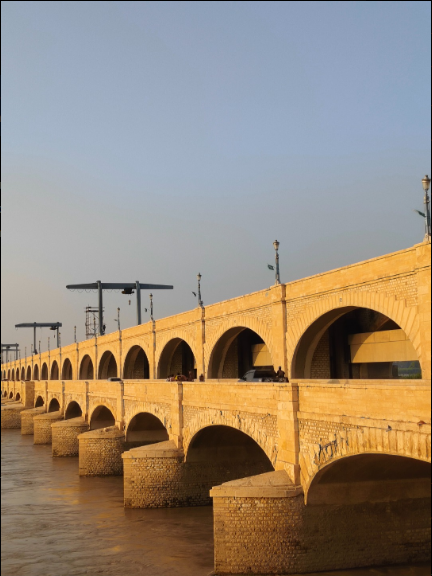
The $314.93 million Sindh Barrages Improvement Project has made substantial progress on physical rehabilitation and modernisation works at Guddu and Sukkur barrages. Yet the World Bank has downgraded the project’s development objective a...

Indus Waters Treaty : A Legal Boost for Pakistan’s Position and Growing Questions for India

Indus Waters Treaty : A Legal Boost for Pakistan’s Position and Growing Questions for India

▫️Muhammad Faisal Sulehria

The Hague arbitration findings reinforce the treaty’s legal status and underline the importance of international agreements in managing water disputes between Pakistan and IndiaThe Indus Waters Treaty is far more than an agreement dividi...

Why Do We Still Prefer Thermal Power When Hydropower Is Cheaper and Available?

Why Do We Still Prefer Thermal Power When Hydropower Is Cheaper and Available?

▫️Muhammad Faisal Sulehria

Pakistan’s power sector is facing a striking contradiction. On one side, hydropower generation has crossed 7,000 MW during the monsoon as higher river flows have improved water availability. On the other, Punjab is reportedly facing a po...

Solar Power Reaches 27% of Total Generation, Transforming the Traditional Infrastructure Model

Solar Power Reaches 27% of Total Generation, Transforming the Traditional Infrastructure Model

▫️Muhammad Faisal Sulehria

Pakistan’s rapidly expanding rooftop and distributed solar market is beginning to reshape not only the country’s energy system but also the economics of residential, commercial and industrial property. According to new analysis by the Pa...

Punjab’s Idle Public Assets: Can Government Property Become a New Source of Revenue and Development?

Punjab’s Idle Public Assets: Can Government Property Become a New Source of Revenue and Development?

▫️Muhammad Faisal Sulehria

Punjab’s decision to establish a dedicated authority for identifying, managing and generating value from underused public assets could represent an important development for both the province’s real estate sector and its public finances....

Possession, Documents and Ownership: The Root Cause of Civil Land Litigation in South Asia

Possession, Documents and Ownership: The Root Cause of Civil Land Litigation in South Asia

Muhammad Faisal Sulehria

A fundamental feature of property disputes in Pakistan and India is that the person recorded as the legal owner in official documents is often different from the person who has physical possession of the land, house or commercial property.


A fundamental feature of property disputes in Pakistan and India is that the person recorded as the legal owner in official documents is often different from the person who has physical possession of the land, house or commercial property.

One party may produce a registered sale deed, mutation entry, land ownership record, inheritance document or court order, while the other relies on prolonged possession, construction, residence, cultivation, electricity bills or testimony from local witnesses as evidence supporting their claim.

This contradiction lies at the heart of a significant number of civil cases involving title to property, recovery of possession, partition, inheritance, injunctions, sale agreements and cancellation of mutation entries.

Where Did the Idea of Fifty Years of Possession Come From?

A widespread public belief suggests that a person who remains in possession of a property for fifty years automatically becomes its legal owner. In reality, no general fifty year rule existed under the laws of British India.

Under the Limitation Act 1908, the general limitation period associated with adverse possession was twelve years. The principle was intended to address situations in which the original owner failed to approach a court for the protection of their rights for an extended period, while another person remained openly in possession of the property in direct denial of the owner’s title.

After the expiry of the prescribed period, the original owner’s legal claim could, in certain circumstances, become barred.

However, not every instance of prolonged possession amounts to adverse possession. A tenant, agricultural tenant, licensee, caretaker, relative or person residing with the permission of the owner does not become the owner merely because time has passed.

To establish adverse possession, it must be proved that the person in possession clearly rejected the title of the original owner, maintained continuous and visible possession, and that the original owner was aware of the hostile nature of that possession.

The Current Law in India

Under India’s Limitation Act 1963, the general period for filing a suit to recover private property is twelve years. This period begins when the defendant’s possession becomes adverse to the original owner.

For certain property claims brought by the government or a local authority, the limitation period is thirty years.

Section 27 of the Indian law further provides that the original owner’s right may be extinguished once the prescribed limitation period expires.

In 2019, the Supreme Court of India ruled that where all legal requirements of adverse possession have been fulfilled, the person in possession may rely on the right acquired through adverse possession not only as a defence but also as the basis of a claim to ownership.

Despite this position, Indian courts apply the doctrine strictly. The person claiming adverse possession must prove the date on which possession began, the nature and continuity of that possession, the boundaries of the property and clear hostility towards the title of the original owner.

Merely stating that a family has lived on the property for several decades, paid electricity bills or constructed buildings on it is not sufficient.

The Supreme Court of India has also strongly criticised the tendency of government institutions to acquire citizens’ land through adverse possession. The Court has observed that a welfare state should not rely on adverse possession to take over property belonging to its citizens.

Why Was Adverse Possession Abolished in Pakistan?

Following independence, Pakistan adopted the Limitation Act 1908. Under Section 28 and Article 144 of the Act, the original owner’s right could be extinguished in certain circumstances, allowing the right of an adverse possessor to become legally established.

In 1991, the Shariat Appellate Bench of the Supreme Court held that depriving an original owner of property merely because of the passage of time, while granting rights to an unlawful possessor, was inconsistent with Islamic principles.

To implement this judgment, Section 28 and Article 144 were deleted in 1995.

Following this change, prolonged unlawful possession in Pakistan, even for fifty years, does not automatically create ownership against the original owner.

However, the law of limitation has not been abolished in its entirety. Limitation periods still apply to claims based on previous possession, eviction, contracts, inheritance and various other rights.

Every dispute must therefore be examined separately according to the nature of the claim, the legal basis of possession and the relevant statutory provision.

The Difference Between a Registered Deed, Mutation and Land Ownership Record

A major misconception in Pakistan is that the entry of a person’s name in a mutation or revenue record conclusively proves ownership.

Courts have repeatedly clarified that mutation entries are primarily recorded for revenue and fiscal purposes. A mutation is not, by itself, a document of title. Nor can it validate an underlying transaction affected by forgery, fraud or lack of legal authority.

A party relying on a mutation must also prove the original transaction on which it is based, such as a sale, gift, inheritance or exchange.

Similarly, a registered document can constitute strong evidence, but registration alone cannot cure every legal defect. If the person selling the property did not possess valid title, the mere registration of the sale deed cannot automatically create lawful ownership.

Why Do Ownership and Possession Become Separated?

There are several practical reasons for the separation between legal ownership and physical possession.

After the death of an owner, heirs often fail to record the inheritance mutation. Joint land may continue to be used for several generations without formal partition. Owners may move abroad or relocate to other cities.

Tenancy and caretaker arrangements are frequently made without written agreements. General powers of attorney are sometimes misused. Registered deeds, revenue records and land maps may not correspond with one another.

In some cases, a court delivers a judgment, but the decision is never incorporated into the relevant revenue record.

Similarly, a buyer may complete the registration of the property but fail to obtain formal physical possession. Some people purchase vacant plots and do not inspect them for years, creating opportunities for fraudsters and organised land grabbers.

On the other hand, some occupants may have used land for several generations but possess incomplete documentation.

In such circumstances, one party presents the legal record while the other presents the physical reality on the ground. This conflict can keep a case pending before the courts for many years.

Government and Judicial Measures in Pakistan

Pakistan enacted the Illegal Dispossession Act 2005 to protect lawful owners and legitimate occupants from people who attempt to remove them from property through force, intimidation or fraud.

The law criminalises unlawful entry into property, illegal occupation and the dispossession of an owner or lawful occupant. Subsequent amendments have further clarified the scope of the legislation.

In Punjab, land records have been computerised through the Land Records Management Information System and the Punjab Land Records Authority.

Land record centres, biometric verification, computerised ownership records and digital mutation procedures are intended to reduce human interference, unauthorised alteration of records and fraudulent mutation entries.

Under the Punjab Urban Land Systems Enhancement project, work is also under way to connect cadastral maps with ownership records, digitally map urban and semi urban land and establish an integrated land information portal.

The objective is to clearly identify the location of every parcel of land, define its boundaries and determine who is recorded as its owner.

During 2025, Punjab also enacted new legislation concerning the protection of ownership of immovable property. The law sought to provide a faster legal process against unlawful dispossession and occupation. Further amendments were introduced in 2026.

Provincial laws have also been amended to facilitate electronic registration and computerised revenue administration.

Efforts to Correct Land Records in India

In India, the Digital India Land Records Modernization Programme is being used to computerise revenue records, integrate registration with mutation procedures, digitise cadastral maps and modernise registration offices.

The National Generic Document Registration System provides states with a shared digital platform for property registration.

In inhabited rural areas, drone surveys, mapping and property cards have been introduced under the SVAMITVA programme.

Despite these initiatives, most land records in India remain presumptive in nature. This means that the record provides strong evidence of a person’s ownership but does not necessarily constitute an absolute and legally guaranteed title issued by the state in every case.

As a result, where a conflict arises between a registered deed, revenue record and physical possession, a court decision may still be required.

Why Computerisation Alone Is Not Enough

Transferring old and disputed records into a computer system without first correcting them does not resolve the underlying conflict. In some cases, it merely gives an inaccurate record a digital form.

The real requirement is to connect the registered deed, mutation, cadastral map, physical boundaries, actual possession, mortgage, court order and inheritance information with the record of the same parcel of land.

As long as different government departments continue to maintain separate and disconnected records, one person will continue to produce a registered deed, another a mutation entry and a third evidence of physical possession.

Measures Required for a Permanent Solution

Pakistan and India must move beyond the mere registration of documents and establish a comprehensive ownership system based on individual parcels of land.

Every plot, house and agricultural parcel should be assigned a permanent and unique identification number connected with the registered deed, revenue record, cadastral map, property tax, mortgage information and pending court cases.

At the time of every sale, the registration of the deed should not be sufficient on its own. A formal document recording the transfer of physical possession should also be mandatory.

This document could include biometric verification of the buyer and seller, location tagged photographs of the property, identification of its boundaries and verification by witnesses.

Whenever an application is made for a mutation, registration, mortgage or any other change in ownership, an immediate mobile phone and email notification should be sent to the recorded owner and all joint owners.

This would make it more difficult for fraudsters to change ownership records in the absence of the actual owner.

Following a court judgment, the ownership and revenue records should be updated automatically. A successful litigant should not be required to visit revenue offices, registration offices and other departments repeatedly to secure implementation of the decision.

A compulsory system should also be introduced for the partition and mutation of jointly owned and inherited property within a prescribed period.

When inheritance mutations remain unrecorded for several generations, the rights of joint owners, purchasers and occupants become severely complicated.

Simple electronic registration should also be made available for tenancy, licence, caretaking and agricultural tenancy agreements. This would prevent possession that originally began with the owner’s permission from later being presented as ownership or adverse possession.

The real cause of property disputes is not limited to land grabbing or defective documentation. It is a fragmented system in which legal ownership, revenue records, cadastral maps and physical possession operate along separate and often conflicting paths.

The doctrine of adverse possession continues to exist in India, although strict legal requirements must be fulfilled before it can be established.

Pakistan abolished the principle under which adverse possession could extinguish the original owner’s title in 1995. Nevertheless, the practical divide between documentation and possession continues to generate disputes for millions of citizens.

A permanent solution will become possible only when the government establishes an authoritative, map linked and continuously updated record for every property, and ensures that both legal ownership and physical possession are transferred simultaneously as part of the same legally recognised transaction.
Punjab's Plan to Develop 120 Model Villages: A New Approach to Rural Infrastructure

Punjab's Plan to Develop 120 Model Villages: A New Approach to Rural Infrastructure

▫️ Muhammad Faisal Sulehria

The Punjab government's decision to approve a pilot programme for developing 120 model villages represents a significant policy initiative aimed at improving rural infrastructure, sanitation and basic public facilities.

World Habitat Day: Three Billion People Worldwide Deprived of Adequate Housing. Why?

World Habitat Day: Three Billion People Worldwide Deprived of Adequate Housing. Why?

▫️ Muhammad Faisal Sulehria

World Habitat Day 2026 has been observed against the backdrop of a deepening global housing crisis in which safe, adequate and affordable shelter remains beyond the reach of billions of people.

10 Years Since Panama Papers, Offshore Secrecy Infrastructure Still Remains

10 Years Since Panama Papers, Offshore Secrecy Infrastructure Still Remains

▫️ Muhammad Faisal Sulehria

Ten years have passed since the Panama Papers exposed the scale and complexity of the global offshore financial system, yet the basic infrastructure that enables financial secrecy and anonymous ownership has not been completely dismantled.

New Provinces or Stronger Local Government? Pakistan Must Fix Governance Before Redrawing Its Map

New Provinces or Stronger Local Government? Pakistan Must Fix Governance Before Redrawing Its Map

▫️Muhammad Faisal Sulehria

Smaller provinces may improve administrative access, but without meaningful political, financial and administrative devolution, Pakistan risks creating more centres of power rather than bringing government closer to citizensPakistan’s go...

World Bank Downgrades Pakistan’s Barrage Project Over Weak Institutional Performance

World Bank Downgrades Pakistan’s Barrage Project Over Weak Institutional Performance

▫️ Muhammad Faisal Sulehria

The $314.93 million Sindh Barrages Improvement Project has made substantial progress on physical rehabilitation and modernisation works at Guddu and Sukkur barrages. Yet the World Bank has downgraded the project’s development objective a...

Indus Waters Treaty : A Legal Boost for Pakistan’s Position and Growing Questions for India

Indus Waters Treaty : A Legal Boost for Pakistan’s Position and Growing Questions for India

▫️Muhammad Faisal Sulehria

The Hague arbitration findings reinforce the treaty’s legal status and underline the importance of international agreements in managing water disputes between Pakistan and IndiaThe Indus Waters Treaty is far more than an agreement dividi...

Why Do We Still Prefer Thermal Power When Hydropower Is Cheaper and Available?

Why Do We Still Prefer Thermal Power When Hydropower Is Cheaper and Available?

▫️Muhammad Faisal Sulehria

Pakistan’s power sector is facing a striking contradiction. On one side, hydropower generation has crossed 7,000 MW during the monsoon as higher river flows have improved water availability. On the other, Punjab is reportedly facing a po...

Solar Power Reaches 27% of Total Generation, Transforming the Traditional Infrastructure Model

Solar Power Reaches 27% of Total Generation, Transforming the Traditional Infrastructure Model

▫️Muhammad Faisal Sulehria

Pakistan’s rapidly expanding rooftop and distributed solar market is beginning to reshape not only the country’s energy system but also the economics of residential, commercial and industrial property. According to new analysis by the Pa...

Punjab’s Idle Public Assets: Can Government Property Become a New Source of Revenue and Development?

Punjab’s Idle Public Assets: Can Government Property Become a New Source of Revenue and Development?

▫️Muhammad Faisal Sulehria

Punjab’s decision to establish a dedicated authority for identifying, managing and generating value from underused public assets could represent an important development for both the province’s real estate sector and its public finances....

More Real Estate News

National Real Estate News

See All →

City and District Real Estate News

See All →

Global Real Estate News

See All →

Corporate Real Estate News

See All →

Social Real Estate News

See All →

Arazi Nama

See All →