ReNews Pakistan
← Back to home

Real Estate Insights

27 news articles

August 5 and Kashmir’s Land: How the Removal of Article 35A Changed the Question of Property, Identity and Local Ownership

August 5 and Kashmir’s Land: How the Removal of Article 35A Changed the Question of Property, Identity and Local Ownership

▫️Muhammad Faisal Sulehria

August 5 is observed in Pakistan as Youm e Istehsal Kashmir. The occasion is usually discussed in the context of constitutional change, political rights and the wider Kashmir dispute. However, one of the most significant consequences of ...

August 5 is observed in Pakistan as Youm e Istehsal Kashmir. The occasion is usually discussed in the context of constitutional change, political rights and the wider Kashmir dispute. However, one of the most significant consequences of the decisions taken on August 5, 2019 relates directly to land, housing and ownership of immovable property.
For this reason, the removal of Article 35A cannot be viewed solely as a constitutional event. It also marked a structural change in the real estate and land ownership framework of Indian administered Jammu and Kashmir.
Article 35A was introduced through the Constitution Application to Jammu and Kashmir Order of May 14, 1954. The provision did not itself set out every restriction governing property transactions. Instead, it empowered and constitutionally protected the Jammu and Kashmir legislature’s authority to define permanent residents and grant them special rights relating to government employment, settlement, scholarships and the acquisition of immovable property. Local laws imposing restrictions on other Indian citizens in these areas were protected from being struck down for violating fundamental rights.
This arrangement meant that land in Kashmir was not treated merely as a commodity available to the highest bidder. Property ownership was linked with residence, local identity, economic control and demographic protection. People who were not recognised as permanent residents could not ordinarily enter the property market and establish permanent settlement in the same manner available in most other parts of India.
Many Kashmiris therefore viewed Article 35A as a legal wall protecting their land, culture and long term economic interests.
On August 5, 2019, the Indian government issued a presidential order and secured parliamentary approval for measures that fundamentally changed Jammu and Kashmir’s constitutional status. The Jammu and Kashmir Reorganisation Act 2019 subsequently divided the former state into the Union Territories of Jammu and Kashmir and Ladakh, with the reorganisation taking effect on October 31, 2019. On December 11, 2023, the Supreme Court of India upheld the constitutional measures taken in 2019, leaving the new arrangement in force within India’s domestic legal system.
The property implications became clearer during 2020. New domicile rules made additional categories of people eligible for domicile status, including those who had lived in Jammu and Kashmir for fifteen years or had studied there for seven years and appeared in a class ten or class twelve examination at a local educational institution. This replaced the earlier system centred on permanent resident certificates with a broader domicile framework.
Further changes followed in October 2020 when several local land laws were amended and others were repealed. The removal of permanent resident requirements from laws including the Jammu and Kashmir Development Act enabled Indian citizens from outside the region to purchase land that was not classified as agricultural. Officials maintained that agricultural land would remain protected, although the legal framework also permits changes in land use for specified development, commercial, educational, health and other purposes subject to approval and planning requirements.
The Indian government presents these reforms as a means of establishing uniform laws, attracting investment, developing industry, improving infrastructure and creating employment. Official statements have argued that the earlier constitutional arrangement restricted development and prevented Jammu and Kashmir from fully benefiting from national laws and investment programmes. The government has also highlighted industrial policies and major investment proposals as evidence of economic opportunity following the changes.
Pakistan, several Kashmiri political parties and local critics offer a sharply different interpretation. They argue that removing protections associated with land and permanent residency could weaken the economic position of Kashmiris and expose the region to demographic and property market pressures. Pakistan maintains that the revised domicile and land ownership regime is intended to alter Kashmir’s demographic and political character. Local opponents have also raised concerns about speculative purchasing, rising land values and the ability of small property owners to compete with larger investors.
From a real estate perspective, the central question is not simply how many investment projects or commercial developments are announced. The more important issue is who receives the value created by that development.
Higher land prices may benefit existing owners in the short term. However, where local incomes, home ownership and access to affordable housing do not rise at the same pace, property growth can also produce displacement, unaffordable housing and wider economic inequality. Capital entering a fragile market can create employment and infrastructure, but without strong safeguards it can also concentrate land ownership in the hands of more powerful investors.
Kashmir’s property market cannot therefore be treated as an ordinary investment market. Every property transfer, land use conversion, industrial estate, tourism project and allocation of public land may affect local livelihoods, agriculture, the environment and the region’s future demographic composition.
Transparent information is essential. Detailed data should be available on property buyers, their residency status, changes in land classification, agricultural land conversions, market prices and the proportion of land remaining under local ownership. Such information would allow development claims and demographic concerns to be assessed through evidence rather than competing political narratives.
Youm e Istehsal Kashmir is also a reminder that land is more than a physical asset recorded in a revenue document. It represents home, inheritance, livelihood, identity and a community’s connection with its future.
The removal of Article 35A changed the legal entrance to Kashmir’s property market. It also made one question more urgent than ever: who will decide how Kashmir’s land is developed, and who will ultimately receive the greatest share of the value created from it?
Punjab's Plan to Develop 120 Model Villages: A New Approach to Rural Infrastructure

Punjab's Plan to Develop 120 Model Villages: A New Approach to Rural Infrastructure

▫️ Muhammad Faisal Sulehria

The Punjab government's decision to approve a pilot programme for developing 120 model villages represents a significant policy initiative aimed at improving rural infrastructure, sanitation and basic public facilities.

World Habitat Day: Three Billion People Worldwide Deprived of Adequate Housing. Why?

World Habitat Day: Three Billion People Worldwide Deprived of Adequate Housing. Why?

▫️ Muhammad Faisal Sulehria

World Habitat Day 2026 has been observed against the backdrop of a deepening global housing crisis in which safe, adequate and affordable shelter remains beyond the reach of billions of people.

10 Years Since Panama Papers, Offshore Secrecy Infrastructure Still Remains

10 Years Since Panama Papers, Offshore Secrecy Infrastructure Still Remains

▫️ Muhammad Faisal Sulehria

Ten years have passed since the Panama Papers exposed the scale and complexity of the global offshore financial system, yet the basic infrastructure that enables financial secrecy and anonymous ownership has not been completely dismantled.

New Provinces or Stronger Local Government? Pakistan Must Fix Governance Before Redrawing Its Map

New Provinces or Stronger Local Government? Pakistan Must Fix Governance Before Redrawing Its Map

▫️Muhammad Faisal Sulehria

Smaller provinces may improve administrative access, but without meaningful political, financial and administrative devolution, Pakistan risks creating more centres of power rather than bringing government closer to citizensPakistan’s go...

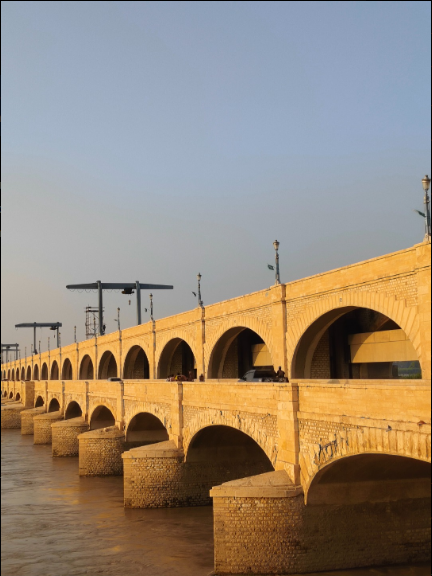
World Bank Downgrades Pakistan’s Barrage Project Over Weak Institutional Performance

World Bank Downgrades Pakistan’s Barrage Project Over Weak Institutional Performance

▫️ Muhammad Faisal Sulehria

The $314.93 million Sindh Barrages Improvement Project has made substantial progress on physical rehabilitation and modernisation works at Guddu and Sukkur barrages. Yet the World Bank has downgraded the project’s development objective a...

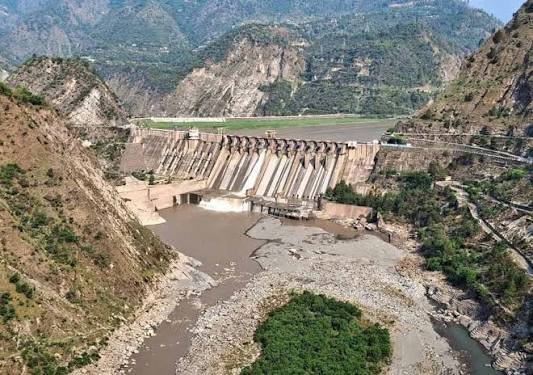
Indus Waters Treaty : A Legal Boost for Pakistan’s Position and Growing Questions for India

Indus Waters Treaty : A Legal Boost for Pakistan’s Position and Growing Questions for India

▫️Muhammad Faisal Sulehria

The Hague arbitration findings reinforce the treaty’s legal status and underline the importance of international agreements in managing water disputes between Pakistan and IndiaThe Indus Waters Treaty is far more than an agreement dividi...

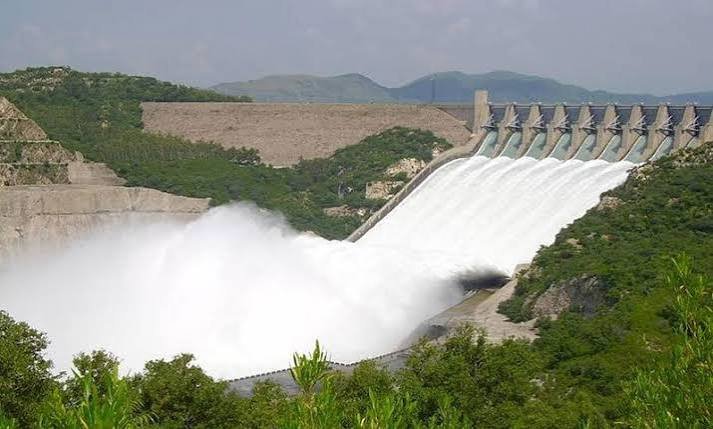
Why Do We Still Prefer Thermal Power When Hydropower Is Cheaper and Available?

Why Do We Still Prefer Thermal Power When Hydropower Is Cheaper and Available?

▫️Muhammad Faisal Sulehria

Pakistan’s power sector is facing a striking contradiction. On one side, hydropower generation has crossed 7,000 MW during the monsoon as higher river flows have improved water availability. On the other, Punjab is reportedly facing a po...

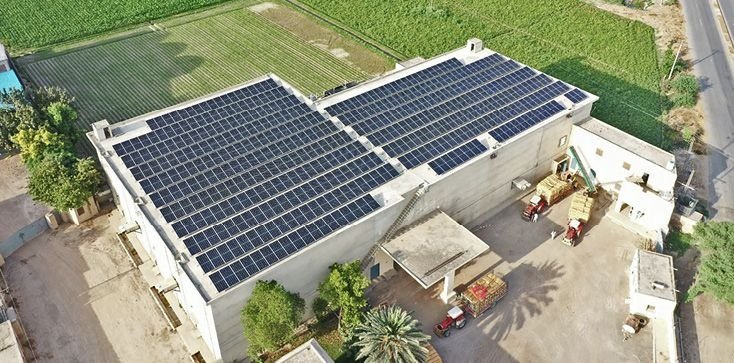
Solar Power Reaches 27% of Total Generation, Transforming the Traditional Infrastructure Model

Solar Power Reaches 27% of Total Generation, Transforming the Traditional Infrastructure Model

▫️Muhammad Faisal Sulehria

Pakistan’s rapidly expanding rooftop and distributed solar market is beginning to reshape not only the country’s energy system but also the economics of residential, commercial and industrial property. According to new analysis by the Pa...

Punjab’s Idle Public Assets: Can Government Property Become a New Source of Revenue and Development?

Punjab’s Idle Public Assets: Can Government Property Become a New Source of Revenue and Development?

▫️Muhammad Faisal Sulehria

Punjab’s decision to establish a dedicated authority for identifying, managing and generating value from underused public assets could represent an important development for both the province’s real estate sector and its public finances....

August 5 and Kashmir’s Land: How the Removal of Article 35A Changed the Question of Property, Identity and Local Ownership

August 5 and Kashmir’s Land: How the Removal of Article 35A Changed the Question of Property, Identity and Local Ownership

▫️Muhammad Faisal Sulehria

August 5 is observed in Pakistan as Youm e Istehsal Kashmir. The occasion is usually discussed in the context of constitutional change, political rights and the wider Kashmir dispute. However, one of the most significant consequences of ...


August 5 is observed in Pakistan as Youm e Istehsal Kashmir. The occasion is usually discussed in the context of constitutional change, political rights and the wider Kashmir dispute. However, one of the most significant consequences of the decisions taken on August 5, 2019 relates directly to land, housing and ownership of immovable property.
For this reason, the removal of Article 35A cannot be viewed solely as a constitutional event. It also marked a structural change in the real estate and land ownership framework of Indian administered Jammu and Kashmir.
Article 35A was introduced through the Constitution Application to Jammu and Kashmir Order of May 14, 1954. The provision did not itself set out every restriction governing property transactions. Instead, it empowered and constitutionally protected the Jammu and Kashmir legislature’s authority to define permanent residents and grant them special rights relating to government employment, settlement, scholarships and the acquisition of immovable property. Local laws imposing restrictions on other Indian citizens in these areas were protected from being struck down for violating fundamental rights.
This arrangement meant that land in Kashmir was not treated merely as a commodity available to the highest bidder. Property ownership was linked with residence, local identity, economic control and demographic protection. People who were not recognised as permanent residents could not ordinarily enter the property market and establish permanent settlement in the same manner available in most other parts of India.
Many Kashmiris therefore viewed Article 35A as a legal wall protecting their land, culture and long term economic interests.
On August 5, 2019, the Indian government issued a presidential order and secured parliamentary approval for measures that fundamentally changed Jammu and Kashmir’s constitutional status. The Jammu and Kashmir Reorganisation Act 2019 subsequently divided the former state into the Union Territories of Jammu and Kashmir and Ladakh, with the reorganisation taking effect on October 31, 2019. On December 11, 2023, the Supreme Court of India upheld the constitutional measures taken in 2019, leaving the new arrangement in force within India’s domestic legal system.
The property implications became clearer during 2020. New domicile rules made additional categories of people eligible for domicile status, including those who had lived in Jammu and Kashmir for fifteen years or had studied there for seven years and appeared in a class ten or class twelve examination at a local educational institution. This replaced the earlier system centred on permanent resident certificates with a broader domicile framework.
Further changes followed in October 2020 when several local land laws were amended and others were repealed. The removal of permanent resident requirements from laws including the Jammu and Kashmir Development Act enabled Indian citizens from outside the region to purchase land that was not classified as agricultural. Officials maintained that agricultural land would remain protected, although the legal framework also permits changes in land use for specified development, commercial, educational, health and other purposes subject to approval and planning requirements.
The Indian government presents these reforms as a means of establishing uniform laws, attracting investment, developing industry, improving infrastructure and creating employment. Official statements have argued that the earlier constitutional arrangement restricted development and prevented Jammu and Kashmir from fully benefiting from national laws and investment programmes. The government has also highlighted industrial policies and major investment proposals as evidence of economic opportunity following the changes.
Pakistan, several Kashmiri political parties and local critics offer a sharply different interpretation. They argue that removing protections associated with land and permanent residency could weaken the economic position of Kashmiris and expose the region to demographic and property market pressures. Pakistan maintains that the revised domicile and land ownership regime is intended to alter Kashmir’s demographic and political character. Local opponents have also raised concerns about speculative purchasing, rising land values and the ability of small property owners to compete with larger investors.
From a real estate perspective, the central question is not simply how many investment projects or commercial developments are announced. The more important issue is who receives the value created by that development.
Higher land prices may benefit existing owners in the short term. However, where local incomes, home ownership and access to affordable housing do not rise at the same pace, property growth can also produce displacement, unaffordable housing and wider economic inequality. Capital entering a fragile market can create employment and infrastructure, but without strong safeguards it can also concentrate land ownership in the hands of more powerful investors.
Kashmir’s property market cannot therefore be treated as an ordinary investment market. Every property transfer, land use conversion, industrial estate, tourism project and allocation of public land may affect local livelihoods, agriculture, the environment and the region’s future demographic composition.
Transparent information is essential. Detailed data should be available on property buyers, their residency status, changes in land classification, agricultural land conversions, market prices and the proportion of land remaining under local ownership. Such information would allow development claims and demographic concerns to be assessed through evidence rather than competing political narratives.
Youm e Istehsal Kashmir is also a reminder that land is more than a physical asset recorded in a revenue document. It represents home, inheritance, livelihood, identity and a community’s connection with its future.
The removal of Article 35A changed the legal entrance to Kashmir’s property market. It also made one question more urgent than ever: who will decide how Kashmir’s land is developed, and who will ultimately receive the greatest share of the value created from it?
Punjab's Plan to Develop 120 Model Villages: A New Approach to Rural Infrastructure

Punjab's Plan to Develop 120 Model Villages: A New Approach to Rural Infrastructure

▫️ Muhammad Faisal Sulehria

The Punjab government's decision to approve a pilot programme for developing 120 model villages represents a significant policy initiative aimed at improving rural infrastructure, sanitation and basic public facilities.

World Habitat Day: Three Billion People Worldwide Deprived of Adequate Housing. Why?

World Habitat Day: Three Billion People Worldwide Deprived of Adequate Housing. Why?

▫️ Muhammad Faisal Sulehria

World Habitat Day 2026 has been observed against the backdrop of a deepening global housing crisis in which safe, adequate and affordable shelter remains beyond the reach of billions of people.

10 Years Since Panama Papers, Offshore Secrecy Infrastructure Still Remains

10 Years Since Panama Papers, Offshore Secrecy Infrastructure Still Remains

▫️ Muhammad Faisal Sulehria

Ten years have passed since the Panama Papers exposed the scale and complexity of the global offshore financial system, yet the basic infrastructure that enables financial secrecy and anonymous ownership has not been completely dismantled.

New Provinces or Stronger Local Government? Pakistan Must Fix Governance Before Redrawing Its Map

New Provinces or Stronger Local Government? Pakistan Must Fix Governance Before Redrawing Its Map

▫️Muhammad Faisal Sulehria

Smaller provinces may improve administrative access, but without meaningful political, financial and administrative devolution, Pakistan risks creating more centres of power rather than bringing government closer to citizensPakistan’s go...

World Bank Downgrades Pakistan’s Barrage Project Over Weak Institutional Performance

World Bank Downgrades Pakistan’s Barrage Project Over Weak Institutional Performance

▫️ Muhammad Faisal Sulehria

The $314.93 million Sindh Barrages Improvement Project has made substantial progress on physical rehabilitation and modernisation works at Guddu and Sukkur barrages. Yet the World Bank has downgraded the project’s development objective a...

Indus Waters Treaty : A Legal Boost for Pakistan’s Position and Growing Questions for India

Indus Waters Treaty : A Legal Boost for Pakistan’s Position and Growing Questions for India

▫️Muhammad Faisal Sulehria

The Hague arbitration findings reinforce the treaty’s legal status and underline the importance of international agreements in managing water disputes between Pakistan and IndiaThe Indus Waters Treaty is far more than an agreement dividi...

Why Do We Still Prefer Thermal Power When Hydropower Is Cheaper and Available?

Why Do We Still Prefer Thermal Power When Hydropower Is Cheaper and Available?

▫️Muhammad Faisal Sulehria

Pakistan’s power sector is facing a striking contradiction. On one side, hydropower generation has crossed 7,000 MW during the monsoon as higher river flows have improved water availability. On the other, Punjab is reportedly facing a po...

Solar Power Reaches 27% of Total Generation, Transforming the Traditional Infrastructure Model

Solar Power Reaches 27% of Total Generation, Transforming the Traditional Infrastructure Model

▫️Muhammad Faisal Sulehria

Pakistan’s rapidly expanding rooftop and distributed solar market is beginning to reshape not only the country’s energy system but also the economics of residential, commercial and industrial property. According to new analysis by the Pa...

Punjab’s Idle Public Assets: Can Government Property Become a New Source of Revenue and Development?

Punjab’s Idle Public Assets: Can Government Property Become a New Source of Revenue and Development?

▫️Muhammad Faisal Sulehria

Punjab’s decision to establish a dedicated authority for identifying, managing and generating value from underused public assets could represent an important development for both the province’s real estate sector and its public finances....

More Real Estate News

National Real Estate News

See All →

City and District Real Estate News

See All →

Global Real Estate News

See All →

Corporate Real Estate News

See All →

Social Real Estate News

See All →

Arazi Nama

See All →