ReNews Pakistan
← Back to home

Arazi Nama

89 news articles

Pakistan’s Housing Shortage: A Growing Urban and Economic Challenge

Pakistan’s Housing Shortage: A Growing Urban and Economic Challenge

Pakistan’s housing crisis is becoming one of the country’s most serious development challenges. Rapid population growth, expanding cities, rising construction costs and limited access to housing finance have created a situation in which millions of families struggle to obtain adequate and affordable homes. Unless addressed through long term policy and institutional reform, the problem will place increasing pressure on Pakistan’s cities, infrastructure and household finances.
The scale of the demographic challenge is substantial. According to the Pakistan Bureau of Statistics (PBS), the 2023 Population and Housing Census was Pakistan’s first digital census and provides detailed information on population, households and housing conditions across the country. Pakistan’s population reached approximately 241.5 million in 2023, making the provision of adequate housing an increasingly complex national challenge.
A figure frequently cited in public debate is a national shortage of around 10 million housing units. This number, however, needs to be treated carefully. Researchers at the Pakistan Institute of Development Economics have challenged the conventional interpretation of the 10 million figure, arguing that housing deprivation cannot simply be equated with millions of families having no physical shelter. Housing inadequacy also involves overcrowding, poor quality structures and inadequate facilities. Therefore, Pakistan’s housing problem is better understood as a combination of shortage, affordability and inadequate housing conditions, rather than merely the absence of houses.
The affordability dimension is particularly serious. The World Bank has described affordable and accessible housing as being in high demand in Pakistan and has supported programmes aimed at increasing affordable housing supply, improving land tenure and expanding mortgage access for lower income households. In 2022, it approved $435 million for three initiatives covering housing finance, urban land systems and affordable housing in Punjab.
Access to finance remains another structural weakness. World Bank figures have previously shown just how underdeveloped Pakistan’s mortgage market has been: in 2018, mortgage finance represented only 0.25 percent of GDP, compared with a South Asian average of 3.4 percent at the time. The institution also reported that nearly one third of Pakistan’s population did not own homes.
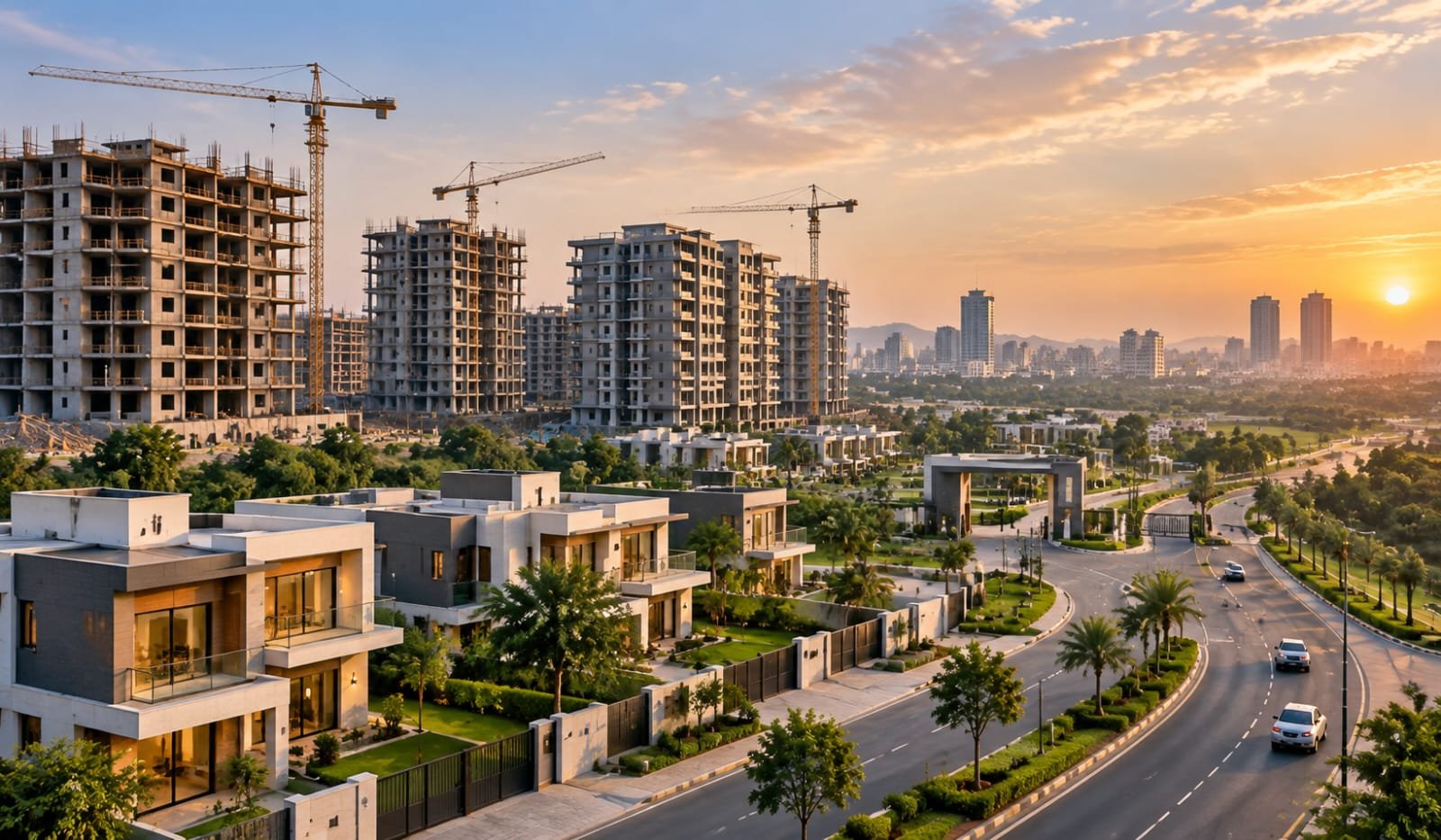
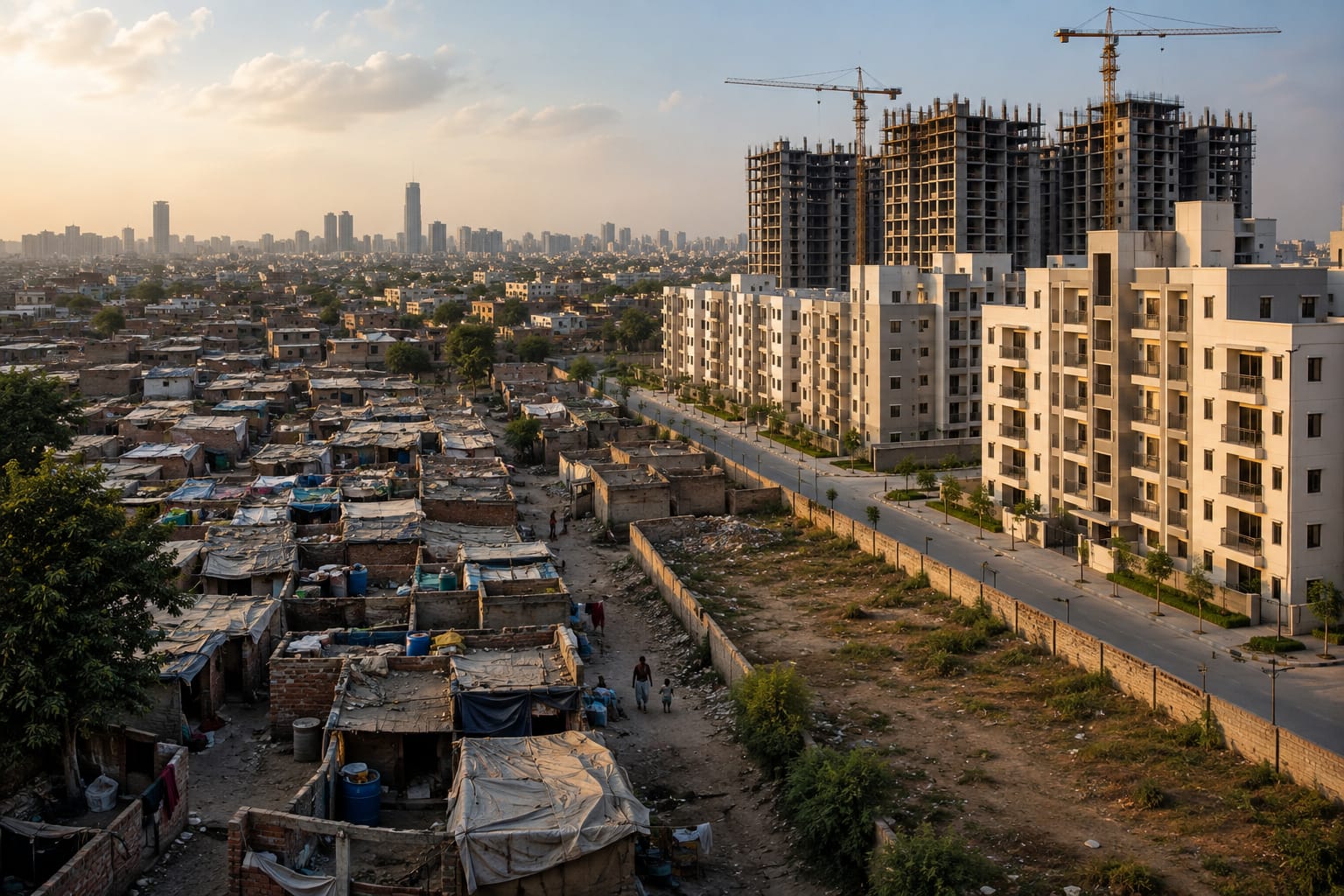
The consequences extend well beyond individual households. When formal housing is unaffordable or unavailable, urban growth can shift toward informal settlements and poorly serviced peripheral areas. Cities then face greater pressure on roads, public transport, water supply, sewerage, electricity, schools and healthcare. At the same time, uncontrolled outward expansion can consume valuable agricultural land and substantially increase the cost of providing urban infrastructure.
Pakistan therefore needs to treat housing as essential national infrastructure rather than simply a real estate commodity. Increasing the number of housing units alone will not solve the problem. New homes must be affordable, properly located, legally documented, connected to employment centres and supported by transport and municipal services.
A sustainable response requires better land use planning, digitised and reliable land records, stronger regulation of housing developments, expansion of long term housing finance and incentives for private developers to produce genuinely affordable units. Rental housing should also become an important part of national housing policy instead of measuring success exclusively through homeownership.
Pakistan’s housing challenge has developed over decades and cannot be solved through a single housing scheme. What is required is a consistent national strategy that connects housing, land, finance, transport and urban planning. Without such reform, population growth will continue to widen the gap between the homes Pakistanis need and the homes they can actually afford.
DHA Estate Agents Association Lahore Election Campaign: Leadership, Performance and Dealers’ Expectations

DHA Estate Agents Association Lahore Election Campaign: Leadership, Performance and Dealers’ Expectations

▫️ Riaz Hussain

The election campaign for the DHA Estate Agents Association Lahore offers the real estate community an important opportunity to define its priorities.

Why Is Consumer Protection Weak in Pakistan’s Real Estate Sector, and Where Can Property Investors Seek Justice?

Why Is Consumer Protection Weak in Pakistan’s Real Estate Sector, and Where Can Property Investors Seek Justice?

▫️ Riaz Hussain

For millions of Pakistanis, owning a home is a lifelong dream. However, turning that dream into reality can sometimes put their entire life savings at risk. Many buyers investing in residential and commercial projects face problems such ...

Property Fraud and Misleading Marketing: The Hidden Risks Facing Pakistan’s Real Estate Buyers

Property Fraud and Misleading Marketing: The Hidden Risks Facing Pakistan’s Real Estate Buyers

▫️

Pakistan’s real estate sector attracts billions of rupees in investment every year, but behind glossy advertisements, ambitious master plans and promises of high returns lies a persistent problem: property fraud and misleading marketing.

DHA Lahore’s Phase 9 Prism Moves Toward Greater Residential and Commercial Occupancy

DHA Lahore’s Phase 9 Prism Moves Toward Greater Residential and Commercial Occupancy

DHA Lahore’s Phase 9 Prism has emerged as one of the city’s major residential and commercial developments, with the opening of possession for plots in 2026 marking the beginning of a new phase of development and construction activity.

Property Taxes vs Real Estate: Can Pakistan Find the Right Balance?

Property Taxes vs Real Estate: Can Pakistan Find the Right Balance?

▫️

Pakistan’s real estate sector stands at a difficult crossroads. On one side, the government needs to increase tax revenues, document property ownership and bring more economic activity into the formal tax system. On the other, property b...

What You Should Know Before Buying Property: It’s Not Just About the Documents

What You Should Know Before Buying Property: It’s Not Just About the Documents

Buying property is one of the biggest financial decisions a person can make.When purchasing a house, apartment, plot or any other type of real estate, buyers usually focus on the price, location and ownership documents. But in reality, c...

New Housing Projects Gain Momentum in Pakistan, Transforming Urban Development and Real Estate Landscape

New Housing Projects Gain Momentum in Pakistan, Transforming Urban Development and Real Estate Landscape

▫️

Pakistan’s housing sector is witnessing increased activity as population growth, urban expansion and rising demand for residential facilities continue to drive the development of new housing projects across the country.

From Building Plan Approval to Safer Structures: Why Building Code Enforcement Matters in Pakistan

From Building Plan Approval to Safer Structures: Why Building Code Enforcement Matters in Pakistan

▫️

Pakistan’s major cities are witnessing a steady increase in high-rise buildings, residential developments, commercial plazas and housing societies.

Crackdown on Illegal Housing Societies in Islamabad: How Can Billions of Rupees Invested by Citizens Be Protected?

Crackdown on Illegal Housing Societies in Islamabad: How Can Billions of Rupees Invested by Citizens Be Protected?

▫️Crackdown on Illegal Housing Societies in Islamabad: How Can Billions of Rupees Invested by Citizens Be Protected?

Recent action against illegal housing societies in Islamabad has once again raised a critical question: How do such societies emerge in the federal capital, who is responsible for monitoring them, and what role should state institutions ...

Pakistan’s Housing Shortage: A Growing Urban and Economic Challenge

Pakistan’s Housing Shortage: A Growing Urban and Economic Challenge

Pakistan’s housing crisis is becoming one of the country’s most serious development challenges. Rapid population growth, expanding cities, rising construction costs and limited access to housing finance have created a situation in which millions of families struggle to obtain adequate and affordable homes. Unless addressed through long term policy and institutional reform, the problem will place increasing pressure on Pakistan’s cities, infrastructure and household finances.
The scale of the demographic challenge is substantial. According to the Pakistan Bureau of Statistics (PBS), the 2023 Population and Housing Census was Pakistan’s first digital census and provides detailed information on population, households and housing conditions across the country. Pakistan’s population reached approximately 241.5 million in 2023, making the provision of adequate housing an increasingly complex national challenge.
A figure frequently cited in public debate is a national shortage of around 10 million housing units. This number, however, needs to be treated carefully. Researchers at the Pakistan Institute of Development Economics have challenged the conventional interpretation of the 10 million figure, arguing that housing deprivation cannot simply be equated with millions of families having no physical shelter. Housing inadequacy also involves overcrowding, poor quality structures and inadequate facilities. Therefore, Pakistan’s housing problem is better understood as a combination of shortage, affordability and inadequate housing conditions, rather than merely the absence of houses.
The affordability dimension is particularly serious. The World Bank has described affordable and accessible housing as being in high demand in Pakistan and has supported programmes aimed at increasing affordable housing supply, improving land tenure and expanding mortgage access for lower income households. In 2022, it approved $435 million for three initiatives covering housing finance, urban land systems and affordable housing in Punjab.
Access to finance remains another structural weakness. World Bank figures have previously shown just how underdeveloped Pakistan’s mortgage market has been: in 2018, mortgage finance represented only 0.25 percent of GDP, compared with a South Asian average of 3.4 percent at the time. The institution also reported that nearly one third of Pakistan’s population did not own homes.
The consequences extend well beyond individual households. When formal housing is unaffordable or unavailable, urban growth can shift toward informal settlements and poorly serviced peripheral areas. Cities then face greater pressure on roads, public transport, water supply, sewerage, electricity, schools and healthcare. At the same time, uncontrolled outward expansion can consume valuable agricultural land and substantially increase the cost of providing urban infrastructure.
Pakistan therefore needs to treat housing as essential national infrastructure rather than simply a real estate commodity. Increasing the number of housing units alone will not solve the problem. New homes must be affordable, properly located, legally documented, connected to employment centres and supported by transport and municipal services.
A sustainable response requires better land use planning, digitised and reliable land records, stronger regulation of housing developments, expansion of long term housing finance and incentives for private developers to produce genuinely affordable units. Rental housing should also become an important part of national housing policy instead of measuring success exclusively through homeownership.
Pakistan’s housing challenge has developed over decades and cannot be solved through a single housing scheme. What is required is a consistent national strategy that connects housing, land, finance, transport and urban planning. Without such reform, population growth will continue to widen the gap between the homes Pakistanis need and the homes they can actually afford.
DHA Estate Agents Association Lahore Election Campaign: Leadership, Performance and Dealers’ Expectations

DHA Estate Agents Association Lahore Election Campaign: Leadership, Performance and Dealers’ Expectations

▫️ Riaz Hussain

The election campaign for the DHA Estate Agents Association Lahore offers the real estate community an important opportunity to define its priorities.

Why Is Consumer Protection Weak in Pakistan’s Real Estate Sector, and Where Can Property Investors Seek Justice?

Why Is Consumer Protection Weak in Pakistan’s Real Estate Sector, and Where Can Property Investors Seek Justice?

▫️ Riaz Hussain

For millions of Pakistanis, owning a home is a lifelong dream. However, turning that dream into reality can sometimes put their entire life savings at risk. Many buyers investing in residential and commercial projects face problems such ...

Property Fraud and Misleading Marketing: The Hidden Risks Facing Pakistan’s Real Estate Buyers

Property Fraud and Misleading Marketing: The Hidden Risks Facing Pakistan’s Real Estate Buyers

▫️

Pakistan’s real estate sector attracts billions of rupees in investment every year, but behind glossy advertisements, ambitious master plans and promises of high returns lies a persistent problem: property fraud and misleading marketing.

DHA Lahore’s Phase 9 Prism Moves Toward Greater Residential and Commercial Occupancy

DHA Lahore’s Phase 9 Prism Moves Toward Greater Residential and Commercial Occupancy

DHA Lahore’s Phase 9 Prism has emerged as one of the city’s major residential and commercial developments, with the opening of possession for plots in 2026 marking the beginning of a new phase of development and construction activity.

Property Taxes vs Real Estate: Can Pakistan Find the Right Balance?

Property Taxes vs Real Estate: Can Pakistan Find the Right Balance?

▫️

Pakistan’s real estate sector stands at a difficult crossroads. On one side, the government needs to increase tax revenues, document property ownership and bring more economic activity into the formal tax system. On the other, property b...

What You Should Know Before Buying Property: It’s Not Just About the Documents

What You Should Know Before Buying Property: It’s Not Just About the Documents

Buying property is one of the biggest financial decisions a person can make.When purchasing a house, apartment, plot or any other type of real estate, buyers usually focus on the price, location and ownership documents. But in reality, c...

New Housing Projects Gain Momentum in Pakistan, Transforming Urban Development and Real Estate Landscape

New Housing Projects Gain Momentum in Pakistan, Transforming Urban Development and Real Estate Landscape

▫️

Pakistan’s housing sector is witnessing increased activity as population growth, urban expansion and rising demand for residential facilities continue to drive the development of new housing projects across the country.

From Building Plan Approval to Safer Structures: Why Building Code Enforcement Matters in Pakistan

From Building Plan Approval to Safer Structures: Why Building Code Enforcement Matters in Pakistan

▫️

Pakistan’s major cities are witnessing a steady increase in high-rise buildings, residential developments, commercial plazas and housing societies.

Crackdown on Illegal Housing Societies in Islamabad: How Can Billions of Rupees Invested by Citizens Be Protected?

Crackdown on Illegal Housing Societies in Islamabad: How Can Billions of Rupees Invested by Citizens Be Protected?

▫️Crackdown on Illegal Housing Societies in Islamabad: How Can Billions of Rupees Invested by Citizens Be Protected?

Recent action against illegal housing societies in Islamabad has once again raised a critical question: How do such societies emerge in the federal capital, who is responsible for monitoring them, and what role should state institutions ...

More Real Estate News

National Real Estate News

See All →

City and District Real Estate News

See All →

Global Real Estate News

See All →

Corporate Real Estate News

See All →

Social Real Estate News

See All →

Real Estate Insights

See All →