

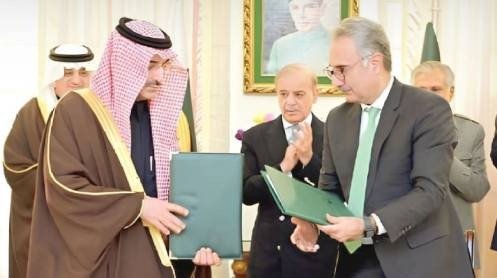
Pakistan has sought a $6.7 billion concessional oil financing facility from Saudi Arabia for 15 years to ease external financing pressures, strengthen energy security and reduce the immediate burden of petroleum imports on the country’s foreign exchange reserves.
Finance Minister Muhammad Aurangzeb raised the proposal to revive and extend the existing $1.2 billion annual oil financing facility on deferred payments during a meeting with Saudi Fund for Development (SFD) Chief Executive Officer Sultan Abdulrahman Al-Marshad on the sidelines of the World Bank and International Monetary Fund (IMF) annual meetings in Thailand.
The Ministry of Finance shared details of the meeting but did not disclose Saudi Arabia’s response to the request. Officials familiar with the discussions said the proposal was under consideration by the Saudi authorities.
According to the finance ministry, the discussions focused on expanding bilateral trade and investment, strengthening private-sector engagement, following up on the bilateral investment protection agreement and exploring opportunities for refinery upgrades.
Both sides also reviewed progress on SFD-supported projects and emphasised the need to develop a new pipeline of initiatives. The Saudi fund reaffirmed its continued support for Pakistan within its mandate.
Saudi Arabia has been providing oil financing to Pakistan through one-year deferred payment arrangements since 2019. The latest facility, signed in February 2025, expired in April. Under the previous agreement, the financing carried an interest rate of 6%, according to officials from the Ministry of Economic Affairs.
Since 2019, the SFD has provided approximately $6.7 billion in financing for petroleum products. Pakistan is now seeking to convert this support into a longer-term arrangement to reduce near-term external financing requirements and provide greater predictability in meeting its petroleum import obligations.
The proposed facility comes amid heightened tensions in the Middle East and uncertainty over international oil prices, both of which pose risks to Pakistan’s external account and energy security.
Saudi Arabia has also extended $3 billion in deposits to Pakistan, which were rolled over for another three months in July. The deposits have helped the country manage external debt repayment obligations and maintain foreign exchange buffers.
Pakistan’s petroleum import bill increased 5.8% to $16.8 billion in the last fiscal year, while crude oil import costs rose 32% to $7.2 billion. The pressure continued into the current fiscal year, with crude oil import costs increasing 40% during July and August.
The government is pursuing longer-term financing arrangements and debt rollovers to ease immediate repayment pressures and manage its external financing requirements. The IMF has estimated Pakistan’s annual gross financing requirements at nearly $30 billion for fiscal year 2027-28.
However, the IMF’s third staff-level report did not include the proposed Saudi oil facility in its projected inflows for fiscal years 2026-27 and 2027-28. Any agreement would therefore provide additional financing support beyond the arrangements currently reflected in the projections.
The proposed facility has not yet been formally approved, and its final terms, including the repayment schedule and applicable financing costs, remain undisclosed.
Separately, Aurangzeb met International Finance Corporation (IFC) Regional Vice President for the Middle East and Central Asia Imad Fakhoury to discuss expanding private-sector investment, supporting employment and promoting sustainable economic growth.
The discussions covered small-business financing, entrepreneurship, capital markets, green and digital bonds, mining infrastructure, value addition, affordable housing and agricultural development. Both sides also explored opportunities in livestock development and pharmaceutical exports through improved regulatory standards and investment.
The finance ministry said the government reaffirmed its commitment to the Reko Diq project and welcomed the IFC’s role in financing initiatives aimed at strengthening Pakistan’s economic growth.
The proposed Saudi oil financing arrangement forms part of Pakistan’s broader efforts to secure longer-term external support, reduce short-term financing pressures and improve the sustainability of its energy import financing.
Published: October 14, 2026 - 5:01 PM
Pakistan Seeks $6.7bn Saudi Oil Facility for 15 Years to Ease External Financing Pressures
پاکستان کا سعودی عرب سے 15 سال کے لیے 6.7 ارب ڈالر کی تیل فنانسنگ سہولت کا مطالبہ
▫️ Proposed long term arrangement aims to reduce foreign exchange burden, strengthen energy security amid rising oil import costs
Pakistan has sought a $6.
































