Islamabad | ReNews Pakistan
Pakistan is seeking to position itself as a major global destination for critical minerals, aiming to transform its estimated $8 trillion mineral wealth into a substantial source of foreign investment, export earnings and industrial development as international demand for strategic raw materials continues to increase.
According to the Institute of Cost and Management Accountants of Pakistan (ICMA), the country has 92 identified minerals, of which 52 are currently being extracted commercially. Pakistan's mineral-bearing areas extend across approximately 600,000 square kilometres, containing resources including copper, gold, lithium, cobalt, chromite, rare earth elements, marble, granite, coal and gypsum.
Despite this extensive resource base, the mining sector has historically contributed less than 3 per cent to Pakistan's gross domestic product (GDP), indicating a significant gap between the country's geological potential and its commercial utilisation.
ICMA estimates suggest that stronger governance, improved security, modern technology, infrastructure development and increased investment could help raise annual mineral exports from approximately $3 billion to $8 billion.
Under favourable economic conditions and broader structural reforms, overall GDP growth could potentially increase from around 3 per cent to 6 per cent. However, these figures represent conditional economic projections rather than guaranteed outcomes or officially achieved targets.
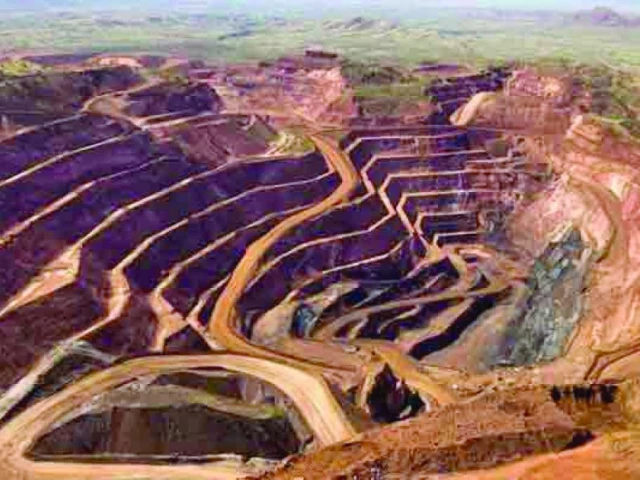
Among Pakistan's major mineral development initiatives, the Reko Diq copper and gold project in Balochistan's Chagai district remains particularly significant.
Considered one of the world's largest undeveloped copper and gold deposits, Reko Diq is expected to begin initial production by the end of 2028. The project could contribute substantially to mineral exports, foreign exchange earnings and employment once commercial operations commence.
The international market for critical minerals is expanding as countries invest in electric vehicles, battery manufacturing, renewable energy systems, electronics and advanced industrial technologies.
These developments have increased the strategic importance of copper, lithium, rare earth elements and other minerals essential for modern manufacturing and energy infrastructure.
Pakistan is seeking to capitalise on its mineral resources and geological position by attracting international mining companies, securing technical partnerships and expanding its participation in global mineral supply chains.
However, economic analysts maintain that exporting unprocessed minerals alone will not allow Pakistan to realise the full economic value of its geological resources.
Domestic mineral processing, refining, manufacturing and the production of higher-value industrial materials are considered essential for maximising export revenues and creating sustainable employment opportunities.
ICMA has highlighted several structural challenges affecting the mining industry, including fragmented governance, unclear regulatory frameworks, inadequate infrastructure, limited local processing facilities, security concerns and shortages of technically skilled workers.
The institute has also emphasised the need for transparent licensing procedures, reliable geological information, environmental safeguards, protection of local communities and consistent investment policies.
Addressing these challenges would help improve investor confidence and support the development of commercially viable mining projects.
Pakistan has also been pursuing mineral sector cooperation with international partners, including the United States, China and Türkiye, to attract capital, obtain advanced technology and develop exploration and processing capabilities.