

Hanoi | ReNews International Desk News
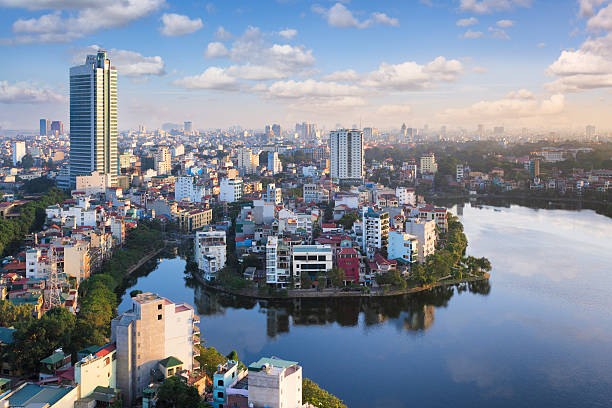
Vietnam’s capital Hanoi is undergoing a rapid transformation through billions of dollars of investment in roads, bridges, drainage systems, public spaces and large urban developments. The construction drive is expected to improve infrastructure and support economic growth, but it is also raising concerns about the future of traditional neighbourhoods, small businesses and families facing relocation.
Official figures show that Hanoi disbursed 64 trillion Vietnamese dong, equivalent to about $2.4 billion, in public investment during the first half of 2026. The amount represented more than 53 percent of the annual public investment plan assigned by the Prime Minister. Land clearance was being carried out for approximately 1,428 projects, including 1,281 projects financed through the state budget and 27 major strategic developments.
The investment programme includes ring roads, new bridges across the Red River, drainage networks, water regulating lakes and measures intended to reduce pollution and protect the city from flooding and extreme weather. Authorities expect the projects to improve transport links, reduce congestion and strengthen Hanoi’s ability to respond to the effects of climate change.
One of the largest schemes is the nearly $28 billion Red River Landscape Boulevard project. Covering more than 11,400 hectares along both banks of the river, it will include two major boulevard routes with a combined length of around 80 kilometres, embankments, public parks, recreational spaces, urban development zones and new water and drainage infrastructure. Implementation is scheduled to continue from 2026 until 2038.
The development also includes resettlement and urban redevelopment zones in areas such as Long Bien, Linh Nam and Bat Trang. During the first phase, Hanoi plans to prioritise the construction of the two main boulevards, river embankments, large public parks, resettlement areas and land clearance.
Another major development is the Olympic Sports City being built on the outskirts of Hanoi at an estimated cost of about $35.2 billion. Backed by Vietnamese conglomerate Vingroup, the scheme will extend across more than 9,000 hectares and include residential and commercial districts as well as a stadium planned to accommodate 135,000 spectators.
The stadium is intended to host major sporting, cultural and public events. Its developers are accelerating construction, although analysts have raised questions about future demand, financial exposure and whether a venue of this scale can remain commercially sustainable over the long term.
Despite the expected economic and infrastructure benefits, land acquisition and the displacement of residents have become some of the most sensitive aspects of Hanoi’s redevelopment.
Homes have been demolished to clear land for new roads, bridges and ring roads. Some affected residents say they have not yet received compensation or clear information about where their families will be relocated. Others are renting temporary accommodation while waiting for decisions regarding payment and replacement housing.
Residents of the Bac Cau community along the Red River have expressed fears that proposed roads could eventually remove their entire settlement. Families say they have lived in the area for generations and that relocation could destroy not only their homes but also established social networks, livelihoods and community traditions.
Hanoi has established compensation and resettlement rules covering acquired land, damaged buildings, relocation expenses and other forms of support. Authorities also say social housing has been prepared for families affected by some major projects, including ring roads and new bridges. However, residents continue to report delayed compensation, uncertainty over relocation and a shortage of affordable alternatives in suitable locations.
Small traders and street based businesses are also being affected. The removal of pavement stalls, signs and commercial structures has reduced income for some vendors who depend on passing customers. The demolition of traditional shophouses, low rise neighbourhoods and older buildings has also prompted concerns that Hanoi could lose important elements of its cultural and architectural identity.
Urban specialists acknowledge that improved roads, flood controls and modern infrastructure are essential for Hanoi’s long term development. However, they argue that residents should be consulted before major decisions are made and that compensation must reflect the real cost of rebuilding lives and businesses.
They also stress that affordable replacement housing should be available near jobs, schools, transport and existing communities rather than in distant areas lacking essential services.
Hanoi’s challenge is therefore not simply to build a more modern city. It must balance infrastructure development and economic ambitions with the protection of residents, historic neighbourhoods and the social character that has shaped the Vietnamese capital for generations.
Published: August 1, 2026 - 12:40 PM
Hanoi’s Rapid Urban Transformation Improves Roads and Infrastructure but Places Historic Communities at Risk
ہنوئی: تیز رفتار شہری تبدیلی، بڑے منصوبوں سے انفراسٹرکچر بہتر مگر پرانی آبادیاں خطرے میں پڑ گئیں
▫️Capital disbursed $2.4 billion for public investment during the first half of 2026 as concerns grow over displacement, compensation and affordable replacement housing linked to major development projects
Hanoi | ReNews International Desk NewsVietnam’s capital Hanoi is undergoing a rapid transformation through billions of dollars of investment in roads, bridges, drainage systems, public spaces and large urban developments. The constructio...
































