Islamabad | ReNews Pakistan
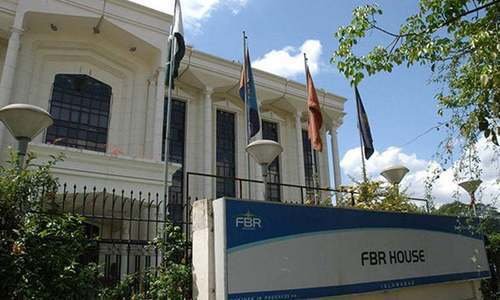
The Federal Board of Revenue (FBR) has established the National Faceless Centre (NFC) in Islamabad under the Finance Act 2026, introducing a major administrative reform aimed at digitising tax audits, assessments and related proceedings while reducing direct interaction between taxpayers and tax officials.
The initiative forms part of the government's broader efforts to modernise Pakistan's taxation system, strengthen institutional transparency, improve accountability and minimise discretionary powers in tax administration.
Under the new framework, tax-related proceedings will increasingly be conducted electronically, replacing traditional arrangements in which taxpayers were required to interact directly with designated tax officers at particular offices.
The legal framework for the establishment of the National Faceless Centre has been provided through Section 32C, introduced under the Finance Act 2026.
According to the provision, the FBR has been empowered, notwithstanding other provisions of the relevant law, to establish the National Faceless Centre and determine its jurisdiction, powers and functions for conducting tax proceedings through a faceless mechanism.
The legislation also authorises the tax authority to establish an administrative structure comprising a Director General, Inland Revenue officers and supporting staff, depending on operational requirements.
Furthermore, the FBR has been empowered to establish different wings and units within the centre to perform specialised functions relating to tax administration and regulatory proceedings.
The FBR formally announced the establishment of the National Faceless Centre on September 25, 2026, following a decision taken during a meeting of the Board in Council.
Under the new system, cases requiring tax audits will be selected through a computerised, risk-based mechanism rather than through the discretionary decisions of individual tax officers.
Once selected, cases will be assigned automatically to designated officers who may be stationed in different parts of the country.
The arrangement is intended to prevent tax officials from independently selecting particular taxpayers for examination and to minimise opportunities for undue influence or personal intervention in tax proceedings.
A significant feature of the faceless system is the separation of responsibilities relating to tax audits, assessments and quality control.
Under Section 32C, these three functions in a specific case for a particular tax period will be performed by separate officers.
One officer will undertake the audit, another will conduct the assessment, while a third officer will review the proceedings to ensure that applicable procedures and quality requirements have been followed before the final order is issued.
This division of responsibilities is designed to ensure that no single official exercises complete control over an individual taxpayer's case throughout the proceedings.
The legislation also provides for the use of electronic communication between different units of the National Faceless Centre, registered taxpayers, their authorised representatives and other relevant persons.
All necessary documents, information, evidence and official correspondence relating to the proceedings will be exchanged electronically.
According to the FBR, notices, responses and hearings under the new system will be processed through its IRIS digital platform.
However, cases requiring physical verification, field inspections or recovery proceedings under the law will be handled by separate field teams.
The National Faceless Centre will operate through dedicated administrative wings responsible for faceless audits, faceless assessments, quality control and field operations.
A Programme Management Unit has also been established to supervise the implementation and operational development of the new system.
The FBR expects the initiative to improve the efficiency and consistency of tax administration by ensuring that cases are processed according to standardised procedures rather than individual preferences.
The reform is also intended to address longstanding complaints concerning unnecessary personal interaction, administrative delays and the exercise of discretionary authority in tax proceedings.
By introducing automated case allocation and separating audit and assessment responsibilities, the tax authority aims to strengthen transparency and accountability within the taxation system.
The establishment of the centre represents another step in Pakistan's transition towards technology-based tax administration, where electronic records, automated processes and digital communication are expected to play an increasingly important role.
However, the effectiveness of the new framework will depend on reliable technological infrastructure, transparent case allocation procedures, data protection safeguards and effective accountability mechanisms.
Ensuring the security and confidentiality of taxpayer information will also remain a crucial requirement as a greater proportion of tax proceedings moves to electronic platforms.
The FBR maintains that the National Faceless Centre will contribute to faster, fairer and more transparent tax proceedings while providing taxpayers with a more standardised and efficient system for handling audits and assessments.
The reform is expected to support wider efforts to strengthen tax compliance, improve institutional performance and modernise Pakistan's overall revenue administration.
Published: October 10, 2026 - 2:01 PM
FBR Establishes National Faceless Centre to Digitise Tax Audits and Assessments Under Finance Act 2026
ایف بی آر کا نیشنل فیس لیس سینٹر قائم، ٹیکس آڈٹ اور اسیسمنٹ کیلئے ڈیجیٹل نظام متعارف
▫️ New Section 32C empowers FBR to introduce electronic tax proceedings, automated case allocation and separate audit, assessment and quality control functions to minimise direct interaction between taxpayers and tax officials
Islamabad | ReNews PakistanThe Federal Board of Revenue (FBR) has established the National Faceless Centre (NFC) in Islamabad under the Finance Act 2026, introducing a major administrative reform aimed at digitising tax audits, assessmen...